Meta Description
Discover the best busy board ideas for toddlers, including sensory activities, learning toys, and creative activity board designs.
Busy Board Ideas for Toddlers: Creative Activity Boards
Every parent knows that toddlers love touching, opening, pushing, pulling, twisting, and exploring everything around them. That’s why busy boards have become one of the most popular educational toys for young children.
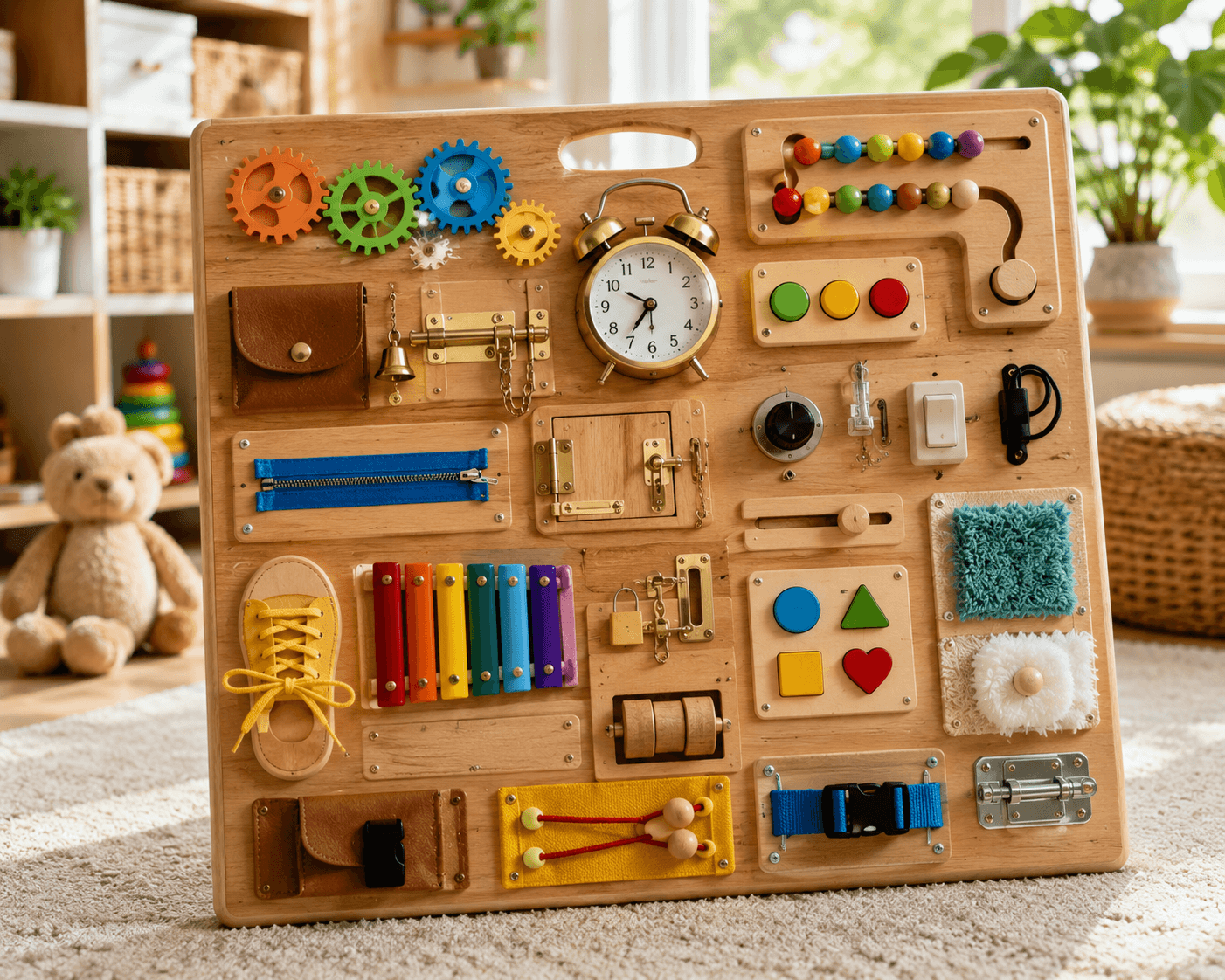
A busy board, sometimes called a sensory board or activity board, is designed to encourage hands-on learning through interactive play. These boards contain everyday objects, textures, colors, shapes, buttons, zippers, locks, gears, beads, and other exciting activities that help toddlers learn important developmental skills.
Whether you’re creating a homemade Montessori-inspired board or purchasing a ready-made activity board, these creative ideas will inspire you.
What Is a Busy Board?
Busy boards are educational activity boards designed to develop cognitive, sensory, and motor skills through play.
These interactive learning tools encourage children to explore different movements, textures, sounds, and shapes.
Many parents use activity boards to help children improve:
- Hand-eye coordination
- Fine motor skills
- Problem-solving abilities
- Creativity
- Sensory development
- Independent learning
Benefits of Busy Boards for Toddlers
Children naturally learn through exploration.
Fine motor development
Buttons, locks, gears, and zippers strengthen hand muscles.
Improved concentration
Interactive toys often encourage children to focus longer.
Better coordination
Simple activities improve hand movements.
Independent play
Busy boards encourage children to explore independently.
Sensory stimulation
Various textures create exciting learning experiences.
Materials You’ll Need
Many parents create homemade activity boards using inexpensive materials.
Wooden boards
Wood remains one of the most popular choices because it is durable and attractive.
Zippers
Zippers help children develop coordination skills.
Locks and latches
These components encourage problem-solving abilities.
Beads
Beads improve fine motor skills.
Velcro strips
Velcro provides sensory stimulation.
Gears and wheels
Moving components create engaging activities.
Popular Busy Board Ideas
Animal-themed activity boards
These designs include adorable animals, colorful shapes, and textured surfaces.
Transportation-themed boards
Children often enjoy airplanes, cars, trains, and boats.
Alphabet activity boards
Letters help support early language development.
Nature-inspired boards
Trees, leaves, flowers, and butterflies create beautiful designs.
Space-themed boards
Stars, rockets, planets, and astronauts encourage imaginative play.
Montessori-Inspired Busy Board Ideas
Montessori principles focus on independence, exploration, and practical learning experiences.
Shoe-tying stations
These activities develop essential life skills.
Buckle activities
Buckles encourage patience and concentration.
Clock activities
Children can learn basic time concepts.
Shape-matching games
These activities support cognitive development.
Safety Tips
Safety should always be your highest priority.
Avoid sharp edges
Smooth surfaces help prevent injuries.
Choose non-toxic materials
Children frequently touch every part of the board.
Secure every object carefully
Loose components can become safety hazards.
Select age-appropriate materials
Always follow the manufacturer’s recommendations.
DIY Busy Board Ideas
Farmhouse-inspired board
Use rustic colors and wooden decorations.
Rainbow sensory board
Bright colors stimulate visual development.
Travel activity board
Compact boards are perfect for road trips.
Wall-mounted activity board
Wall-mounted designs save space.
Common Mistakes to Avoid
Using too many components
Simple designs often work best.
Ignoring safety requirements
Careful preparation is essential.
Choosing fragile materials
Durability should remain a priority.
Creating overly complicated designs
Simple activities maintain children’s interest.
Comparison Table
| Activity | Skill Development |
|---|---|
| Buttons | Coordination |
| Locks | Problem-solving |
| Zippers | Fine motor skills |
| Gears | Hand-eye coordination |
| Beads | Concentration |
Frequently Asked Questions
1. What age is best for a busy board?
Most activity boards are suitable for toddlers between one and three years old.
2. Are Montessori busy boards beneficial?
Yes, they encourage independent learning.
3. Which materials are safest?
Natural wood and non-toxic materials are excellent choices.
4. Can I create a homemade activity board?
Absolutely.
5. How large should the board be?
The answer depends on the available space.
6. Which activities are most popular?
Buttons, locks, gears, and zippers remain popular choices.
7. Can children use busy boards independently?
Adult supervision is recommended.
8. Are travel busy boards useful?
Yes, especially during long journeys.
9. How can I clean a busy board?
A soft cloth usually works well.
10. Are sensory boards expensive?
Many affordable options are available.
Conclusion
Busy boards provide children with endless opportunities to learn, explore, and develop important skills through play. Whether you choose a Montessori-inspired board, a sensory board, or a homemade design, your toddler will enjoy hours of creative fun.
Key Takeaways
- Busy boards encourage independent learning.
- Interactive activities improve coordination.
- Montessori principles support exploration.
- Safety should always come first.
- Simple designs are often the most effective.
#ParentingTips