

Baby sleep schedule guide by age. Learn naps, night sleep, routines, and tips to help your baby sleep better.
Sleep can feel like a mystery when you bring your baby home. One day, they nap all the time, the next day, nothing seems to work. That’s where a simple baby sleep schedule can make a big difference. By understanding baby sleep patterns and building a gentle infant sleep routine, you can create calmer days and more restful nights. Many parents wonder how much babies sleep and what’s truly normal in the first year. The truth is, every baby is different, but learning about baby sleep by age helps you set realistic expectations. With the right approach, sleep becomes easier for both you and your little one.
Why Baby Sleep Schedule Is So Important in the First Year
Sleep is not just rest. It is a powerful tool for your baby’s growth. During sleep, the brain develops quickly. This is where baby brain development sleep plays a key role. Good sleep also supports growth and sleep in babies and helps regulate mood and feeding. When you follow a simple baby sleep schedule, your baby feels calmer and more secure.
At the same time, sleep shapes your daily life. A healthy baby bedtime routine improves both the baby’s daytime sleep and nighttime sleep. You may ask how many hours a newborn should sleep or wonder about total sleep hours for babies. The answer depends on age, but one thing is clear. Good sleep helps both the baby and parents feel better.
The Truth About Baby Sleep (What Most Parents Get Wrong)
Many parents believe sleep gets better on its own. That is not always true. Baby’s sleep patterns often change suddenly. You may face baby sleep regression or even the common 3-month sleep regression. These changes are normal, but they can feel frustrating. This is why many parents face newborn sleep struggles early on.
You might also wonder Is it normal for newborns to wake at night, or even ask Why does my baby wake up every 2 hours. The answer is yes. Newborns wake often because of hunger and comfort needs. This is part of the baby’s feeding and sleep cycle. Understanding this helps reduce stress and improves your confidence.
When Can You Start a Baby Sleep Schedule?
In the beginning, babies do not follow a strict routine. A newborn’s sleep schedule is flexible and unpredictable. However, around 6 to 8 weeks, you may notice patterns. This is when you can gently guide your baby into a baby’s daily routine using baby sleep cues and Sleepy signs for babies.
You may ask How to get a baby on a sleep schedule. The answer is simple. Watch your baby. Follow wake windows for babies and create a calm routine. Avoid strict timing. Instead, focus on consistency. This helps reduce baby sleep anxiety and supports healthy sleep habits.
Baby Sleep Needs by Age (Quick Overview)
Every baby is different. Still, there are general sleep needs. When you understand baby sleep by age, things become easier. The balance between nighttime vs daytime sleep changes as your baby grows. Younger babies sleep more during the day, while older babies sleep longer at night.
Many parents ask about the average number of hours a baby sleeps or the longest sleep stretch a baby can have. These vary, but patterns improve over time. Knowing this helps you manage expectations and feel less overwhelmed as a parent.
Baby Sleep Schedule Chart (0–12 Months)
A simple infant sleep chart can guide you. It shows how much babies sleep at different ages. This helps you plan a realistic baby nap schedule and understand changes in sleep.

|
Age Range |
Total Sleep |
Night Sleep |
Naps |
Notes |
|
0–2 Months |
14–18 hrs |
8–10 hrs |
4–6 |
Frequent feeding |
|
2–4 Months |
12–16 hrs |
8–10 hrs |
3–4 |
Early routine forms |
|
4–8 Months |
12–16 hrs |
9–11 hrs |
2–3 |
Sleep improves |
|
8–12 Months |
12–16 hrs |
10–12 hrs |
2 |
Longer stretches |
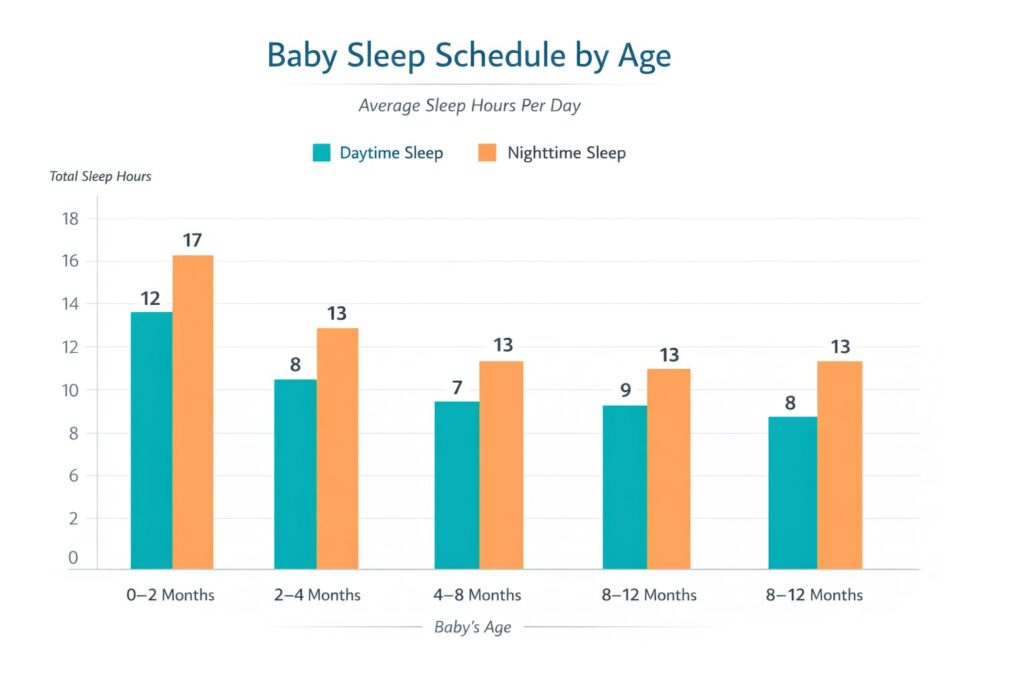
Newborn Baby Sleep Schedule (0–2 Months)

The newborn-to-2-month sleep stage is unpredictable. Your baby sleeps in short bursts. This happens because of an undeveloped baby’s circadian rhythm. Your baby wakes often for feeding. This leads to frequent night wakings and broken sleep cycles.
Many parents worry about their baby waking at night or waking up crying at night. This is normal. You are in the fourth-trimester baby stage. Comfort matters more than routine. Use swaddling newborns and white noise for babies to create a calm baby sleep environment.
Baby Sleep Schedule (2–4 Months)
At this stage, the 2 to 4-month-old baby’s sleep starts improving. Your baby begins to develop patterns. You may notice longer sleep stretches and fewer night wakings. This is a good time to build a gentle infant sleep routine.
Parents often ask How long should baby naps be or worry about a baby’s problem with short naps. Naps should be balanced. Avoid long daytime sleep. This supports better baby night sleep. Also, watch for early signs of baby sleep regression.
Baby Sleep Schedule (4–8 Months)
The 4 to 8 months sleep schedule brings big changes. Your baby may sleep longer at night. Some babies even start sleeping through the night. However, challenges like teething and the 8-month sleep regression may appear.
This is also the stage of nap transition. Your baby may move from three naps to two. You might face issues like the baby refusing to sleep alone or the baby not sleeping at night. Stay consistent. Use simple baby sleep tips and focus on a strong bedtime routine for babies.
Baby Sleep Schedule (8–12 Months)
During the 8 to 12-month-old baby sleep stage, sleep becomes more stable. Your baby usually takes two naps. Night sleep improves with longer stretches. However, emotional changes like separation anxiety can affect sleep.
You may still deal with the baby waking at night or wonder about what time the baby should go to bed. A consistent routine helps. Keep the room calm and dark. This supports a better Sleep cycle for babies and reduces disruptions.
12-Month (1 Year) Baby Sleep Schedule
The 1-year-old sleep schedule marks a new phase. Your baby becomes more active and curious. Sleep remains important, but routines may shift. Many babies begin dropping one nap during this stage.
Parents often ask When do babies sleep through the night. At this age, many babies can sleep longer without waking. However, flexibility is key. Adjust your baby’s daily routine based on your child’s needs.
Common Baby Sleep Schedule Problems & Solutions

Sleep problems are normal. You may notice signs of overtiredness in your baby or struggle with baby sleep regression. Issues like a baby not sleeping at night or a baby waking up crying at night can feel overwhelming.
Understanding the root cause helps. Sometimes it is hunger. Other times, it is overstimulation. Learning how to fix the baby’s sleep schedule can make a big difference. Stay patient and consistent. Progress takes time.
How to Help Your Baby Sleep Better (Proven Tips)
Better sleep starts with simple habits. Focus on how to help a baby sleep better by creating a calm environment. Use tools like white noise for babies and maintain a steady routine. These small steps improve sleep quality.

You can also explore Sleep Training Basics and gentle calming techniques for babies. Some parents try the dream feed method to extend sleep. These strategies offer real Parenting Sleep Advice and help reduce stress for tired parents’ baby sleep.
Final Thoughts on Baby Sleep Schedule
Every baby is unique. Your journey will not look exactly like others. A flexible baby sleep schedule works best. Focus on progress, not perfection. Trust your instincts and follow your baby’s needs.
If you ever feel unsure, remember this. You are learning every day. With time, patience, and the right First-time mom sleep tips, things will get easier. Sleep will improve, and so will your confidence ❤️
FAQ
How many hours should a newborn sleep?
Newborns usually sleep about 14–18 hours a day in short stretches.
Their sleep is spread between day and night due to frequent feeding needs.
When do babies sleep through the night?
Most babies start sleeping longer stretches around 4–6 months.
By 6–12 months, many can sleep through the night, but every baby is different.
Why does my baby wake up every 2 hours?
Babies wake often due to hunger, comfort needs, or sleep cycles.
This is completely normal, especially in the newborn stage.
How to get a baby on a sleep schedule?
Start by watching your baby’s sleepy cues and keeping routines consistent.
Focus on flexible timing rather than strict schedules in the early months.
What time should the baby go to bed?
Newborns sleep later, often around 9–10 PM.
By 3–6 months, bedtime usually shifts earlier to 7–8 PM.
How long should baby naps be?
Naps can range from 30 minutes to 2 hours, depending on age.
Short naps are normal, especially in younger babies.
Is it normal for newborns to wake at night?
Yes, newborns wake often for feeding and comfort.
Frequent night waking is a healthy and expected behavior.