
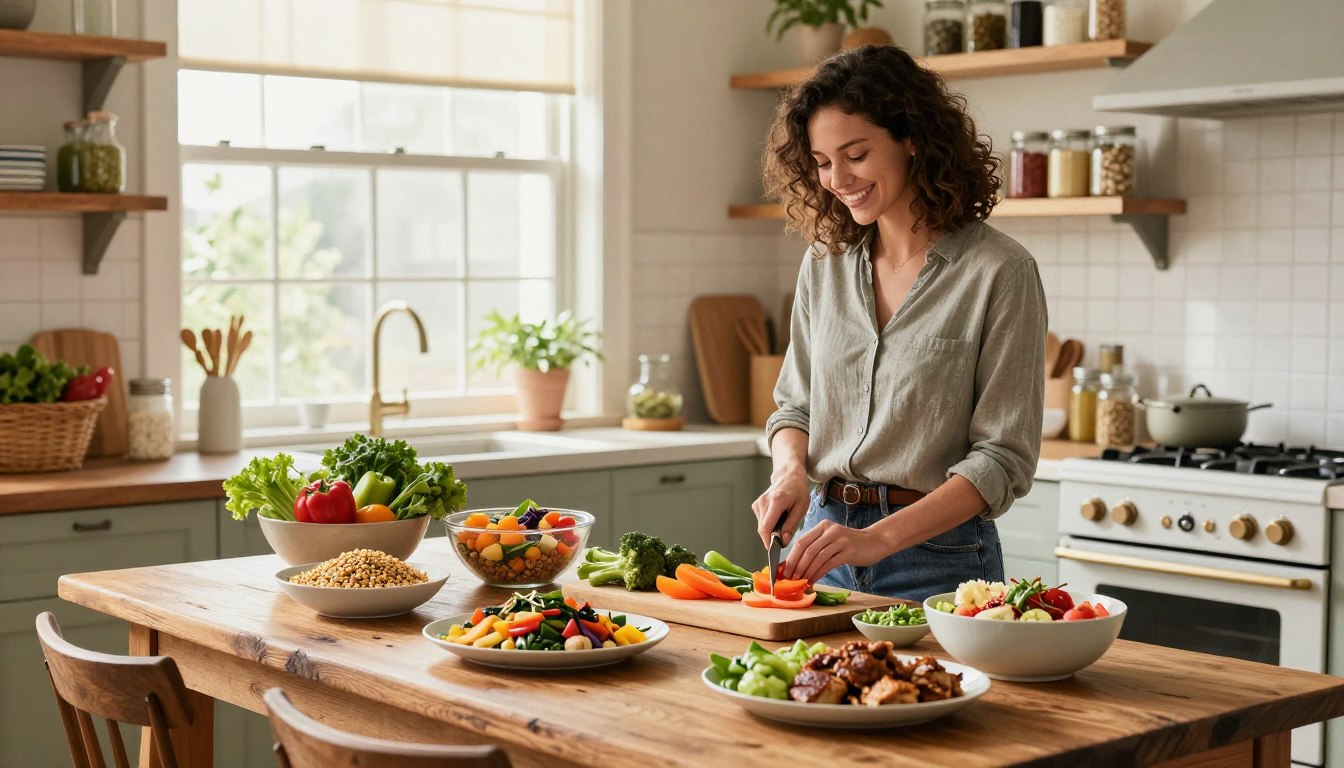
Do you often struggle to pick what to cook for dinner? You’re not alone. Busy parents usually have a lot to do at once. Meal planning can feel like another big task.
Mealtime can be stressful, but it doesn’t have to be. When everyone helps plan meals, it’s more fun. Studies show that kids learn and have fun when they help with healthy meal ideas and cooking.
By making meal planning easier, you save time and feel less stressed. This article will share easy tips for planning meals that everyone will enjoy.
Key Takeaways
- Simplify mealtime by involving the whole family in meal planning
- Reduce decision fatigue and save time with a structured meal plan
- Enjoy healthier eating by incorporating a variety of nutritious meals
- Make mealtime more educational and fun by involving kids in cooking
- Discover practical tips for easy meal prep on busy days
Understanding the Importance of Meal Planning
Busy families find meal planning saves time, money, and sanity. It makes mealtime simpler and more fun for all.
Benefits for Busy Families
Meal planning is great for families with no time. It makes a grocery list, cuts food waste, and saves money. Planning meals means you shop better and avoid takeout.
- Reduces stress from last-minute meals
- Makes eating healthier with planned meals
- Brings family closer during meals
How It Saves Time and Money
Meal planning saves time and money. It helps you:
- Make a better grocery list, saving time in stores.
- Avoid expensive takeout or dining out.
- Use ingredients better, cutting down on waste and saving money.
Using a simple family meal planner changes everything. It makes cooking easier and keeps your meals affordable. This way, you use your resources wisely.
How to Get Started with Meal Planning
Starting meal planning is about knowing what your family likes. It’s different for everyone. It depends on what you can eat, your life, and your taste.
Assessing Your Family’s Needs
To plan meals well, know what fits your family. Think about:
- Ages and dietary needs of family members
- Busy days and slow days
- Favorite meals and ingredients
- Budget constraints
Knowing these helps make a meal plan that’s good for your family. It should be easy and fun.

Choosing a Planning Method
There are many ways to plan meals. What’s best for you depends on what you like and how tech-savvy you are. Some popular ways include:
- Using a meal planning app
- Creating a physical planner or calendar
- Making a simple list on your fridge or a note on your phone
Try different ways to see what works for you. You might start simple and get more complex as you get better at planning.
Here’s a look at different meal planning methods:
| Method | Ease of Use | Customization | Cost |
|---|---|---|---|
| Meal Planning Apps | Easy | High | Free – $10/month |
| Physical Planner | Moderate | High | $10 – $30 |
| Simple List | Very Easy | Low | Free |
Choose a method that fits you and knows your family’s needs. This way, you can make a meal plan that’s effective and enjoyable. Remember, meal planning should make mealtime easier and less stressful. Feel free to try new things and change your plan as needed.
Meal planning is a journey, not a destination. It’s about finding a rhythm that works for your family and making adjustments as needed. With time, meal planning will become a big help in your life.
Creating a Weekly Meal Plan
A good weekly meal plan makes mealtime easy and happy. It helps your family eat healthy and saves time and money. Planning meals is a smart move.
Building a Balanced Menu
It’s key to have a balanced menu in your meal plan. You should have lots of fruits, veggies, whole grains, lean proteins, and healthy fats. This makes sure your family gets all the nutrients they need.
It also makes meals fun by trying new tastes and textures.
- Use seasonal produce for freshness and variety.
- Try different cuisines to keep things interesting.
- Plan for leftovers to save time and reduce waste.

Incorporating Family Favorites
It’s also important to include family favorites in your meal plan. This makes mealtime fun for everyone. It also means your family will look forward to eating.
By mixing old favorites with new recipes, you make mealtime both comforting and exciting.
- Ask your family what they love to eat and add it to the plan.
- Try new recipes together to find new favorites.
- Make mealtime special by setting the table and turning off the TV.
By following these tips, you can enjoy healthy meal ideas for families. Mealtime will become a positive experience for everyone.
Budgeting for Your Meals
Planning meals on a budget is more than saving money. It makes mealtime easier and less stressful. By setting a budget and shopping smart, you can feed your family well without spending too much.
Setting a Realistic Grocery Budget
To set a budget, first track your spending. Write down every grocery purchase for a month. This shows where your money goes. Then, think about your family’s needs and likes to set a budget.
Here are tips for a realistic budget:
- Plan meals around sales and seasonal produce.
- Use coupons and discount codes.
- Buy in bulk and stock up on non-perishable items.
- Avoid impulse buys by making a shopping list.
Tips for Shopping on a Budget
Shopping smart is key to staying within your budget. Here are some tips:
| Shopping Strategy | Benefits |
|---|---|
| Shop sales | Save up to 50% on certain items |
| Buy generic or store brands | Often comparable in quality to name brands, at a lower price |
| Use cashback apps | Earn money back on your grocery purchases |
By using these tips, you can enjoy budget-friendly family meal planning that’s healthy and tasty. Be flexible and adjust your plans based on sales and what’s in season.
For busy parents, easy meal prep is a big help. Spend a few hours on the weekend preparing meals for the week. This can include cooking proteins, roasting veggies, and making salads or meal containers.
Involving Kids in Meal Planning
Meal planning is more than just planning food. It’s about making memories with your kids. By letting them help, you make dinner time fun for everyone.

Making Meal Planning Fun for Kids
Make meal planning exciting for kids. Let them help pick out groceries or recipes. You can also:
- Let them choose a new fruit or veggie to try each week.
- Have them help with cooking, like measuring and stirring.
- Play a “taste test” game to guess ingredients.
These fun activities teach kids kitchen skills. They learn that their ideas are important.
The Educational Benefits of Cooking Together
Cooking with kids is educational. They learn about measurements, following directions, and nutrition. They discover new ingredients and cooking methods.
Cooking together as a family builds teamwork. It’s a chance to spend time together, away from screens. It makes mealtime fun for everyone.
Make meal planning fun for your kids. Encourage them to try new things. Praise their efforts, even if it’s not perfect. They’ll grow more confident in the kitchen and love cooking and healthy eating.
Batch Cooking and Meal Prep Strategies
Busy parents always look for ways to make mealtime easier. Batch cooking and meal prep are great for this. They save time and make sure your family eats healthy, home-cooked meals.
Advantages of Batch Cooking
Batch cooking means making lots of food at once. Then, you can heat it up as needed. This method has many key advantages, including:
- Saving time when schedules are tight
- Less food waste by using what you have
- Healthy meals ready even on busy days
Spending a few hours on the weekend on batch cooking makes the week easier. It’s a simple way to manage your family’s meals.
Best Foods for Meal Prep
Not all foods are good for meal prep. Some keep well when refrigerated and reheated. Here are some top picks for meal prep:
| Food Type | Reheating Tips | Meal Ideas |
|---|---|---|
| Soups and Stews | Reheat on the stovetop or in the microwave | Chicken noodle soup, beef stew |
| Casseroles | Reheat in the oven or microwave | Lasagna, chicken enchilada casserole |
| Grains and Proteins | Reheat in the microwave or on the stovetop | Cooked rice, grilled chicken breasts |
Adding these foods to your meal prep can give you many quick and easy family meals. They are healthy and tasty. Whether you’re new to meal prep or experienced, finding a method that fits your family is key.
Healthy Alternatives for Classic Dishes
With a few simple tweaks, you can turn traditional recipes into nutritious meals. Your whole family will love them. Healthy eating doesn’t mean giving up flavor or comfort.
Making Comfort Foods Healthier
Comfort foods are a staple in many homes. But they often have a high nutritional cost. By making a few adjustments, you can enjoy your favorite comfort foods in a healthier way.
Here are some tips to make comfort foods healthier:
- Use lean proteins like chicken or turkey instead of beef or pork.
- Incorporate more vegetables into your dishes, such as adding spinach to pasta sauces or using zucchini noodles.
- Opt for baking or grilling instead of frying.
Sneaking in Vegetables
One of the easiest ways to boost your meals’ nutritional value is by adding more vegetables. You can puree them into sauces, soups, or even baked goods. This method adds nutrients and helps reduce food waste by using up vegetables that are past their prime.
Try these creative ways to sneak in more veggies:
- Add finely chopped vegetables like carrots or zucchini to meatloaf or burgers.
- Blend cooked vegetables into soups or sauces for added nutrition.
- Use cauliflower as a low-carb substitute for grains in dishes like pizza crusts or rice.
By implementing these strategies, you can create healthy, delicious meals. Your family will enjoy them. It’s all about making small changes that add up to make a big difference in your family’s eating habits.
Managing Leftovers Creatively
Turning leftovers into new meals is good for the planet and your wallet. It helps you use up food instead of throwing it away.
Recipes for Leftover Transformation
Make new meals from leftovers. For example, leftover chicken can be chicken salad or soup. Use leftover veggies in stir-fries, soups, or stews.
Here are some creative ideas for leftover transformation:
- Turn leftover mashed potatoes into potato pancakes.
- Use leftover bread to make croutons or bread pudding.
- Transform leftover pasta into a pasta salad or frittata.
Storage Tips for Freshness
Keeping leftovers fresh is important. Here are some tips:
- Cool leftovers to room temperature before refrigerating or freezing.
- Use airtight containers to prevent moisture and other flavors from affecting the leftovers.
- Label containers with the date and contents.
To plan and organize leftovers, use this table:
| Day | Leftover Meal | Storage Method |
|---|---|---|
| Monday | Chicken Salad | Refrigerate |
| Tuesday | Pasta Frittata | Refrigerate |
| Wednesday | Vegetable Soup | Freeze |
By using these tips, you can reduce waste and save money. It’s a smart way to plan meals and cut costs. It’s part of a simple family meal planner and makes planning meals budget-friendly.
Adapting Plans for Dietary Restrictions
Managing dietary restrictions can be tough. But, with the right plan, you can make meals for everyone. It’s key to meet different needs, like allergies or special diets.
Navigating Common Allergies and Preferences
For allergies like gluten or nuts, find good substitutes. For vegetarians or vegans, use plant-based proteins. This makes meals fun for all.
Finding Resources for Specialized Meal Plans
Many tools help with meal plans for dietary needs. Cookbooks, online tools, and health sites offer great advice. They help make meals healthy and fun for all.
FAQ
How do I start meal planning for my family?
First, think about what your family likes to eat. Look at food allergies and dislikes. Then, pick a way to plan meals that works for you, like apps or planners.
What are some tips for saving time and money through meal planning?
Plan meals early to avoid takeout and save money. Try cooking in batches to save time. Make a list before you shop to avoid extra buys.
How can I involve my kids in meal planning?
Make meal planning fun for kids. Let them help with planning and shopping. They can also help with simple cooking tasks. It’s a great way to teach them about food.
What are some healthy alternatives to classic comfort foods?
Make comfort foods healthier by adding veggies and using lean meats. For example, use whole wheat pasta and broccoli in mac and cheese.
How can I manage leftovers effectively?
Turn leftovers into new meals or freeze them. Store leftovers in airtight containers. Use them to make soups, stir-fries, or casseroles.
How do I adapt meal plans for families with dietary restrictions?
Know the dietary needs, like gluten-free or vegan. Find recipes that fit these needs. Look online or in cookbooks for ideas.
What are some budget-friendly family meal planning tips?
Plan meals with seasonal produce and use coupons. Buy in bulk and prep meals to save. It cuts down on waste and saves time.
How can I make meal planning a family-friendly experience?
Involve everyone in meal planning. Make it fun by letting them help cook. Plan meals they love to make everyone happy.