
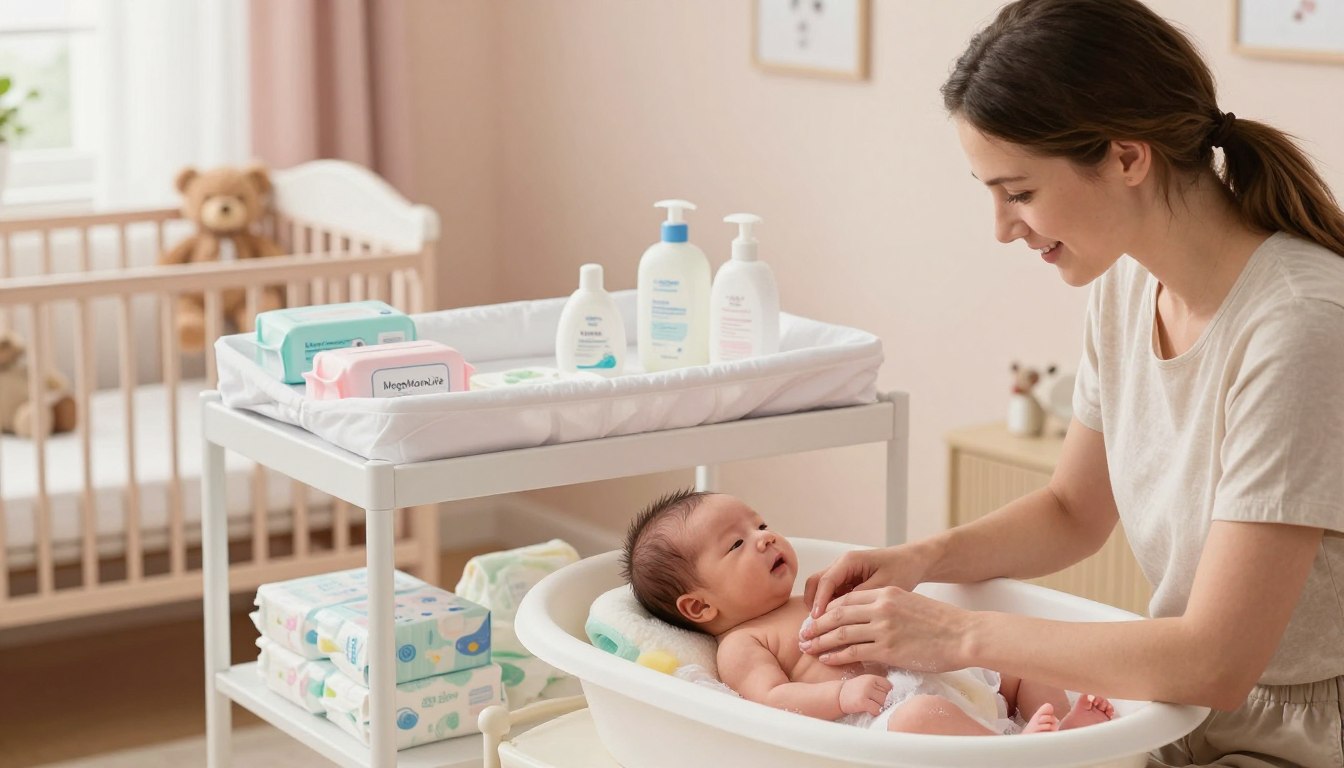
As new parents, making sure your baby is healthy is very important. Proper care for your newborn starts right after they are born. This means watching their health, growth, and happiness.
It can be both fun and scary to care for a newborn. Our guide is here to help. It gives you useful tips on baby care and infant health. By following our advice, you can make a safe and loving space for your baby to grow.
Key Takeaways
- Understand the importance of proper newborn care for your baby’s health and development.
- Learn how to create a safe and comfortable environment for your newborn.
- Discover practical tips on maintaining your baby’s hygiene and overall well-being.
- Get guidance on monitoring your baby’s health and responding to their needs.
- Find support and reassurance as you navigate the challenges of new parenthood.
Understanding Newborn Hygiene Basics
Keeping your newborn clean is key to stop infections and keep them healthy. As a new parent, you might wonder how to keep your baby clean and safe.
Importance of Hygiene in Infants
Good hygiene is very important for babies. Their immune systems are not fully grown yet. Keeping them clean helps stop infections and keeps them well.
Here are some reasons why hygiene is so important for babies:
- Preventing infections
- Reducing the risk of skin conditions
- Promoting overall health and well-being
Common Hygiene Concerns
New parents often worry about hygiene issues. Here are some common worries and tips to help:
| Hygiene Concern | Tips for New Parents |
|---|---|
| Bathing Frequency | Bathe your newborn 1-2 times a week. This keeps their skin from losing natural oils. |
| Diaper Changing | Change diapers often, every 2-3 hours. This helps avoid diaper rash. |
| Hand Hygiene | Make sure to wash your hands well before touching your baby or their things. |
By following good hygiene practices, you can lower the chance of infections. This helps keep your newborn healthy.
Bathing Your Newborn
Bathing your newborn is more than keeping them clean. It’s a chance to bond and start a calming routine. Learning how to bathe your baby safely is key.
When to Start Bathing
Start with sponge baths until the umbilical cord falls off. Then, bathe in a tub 2–3 times a week. Don’t bathe too much to keep their skin oily.
Choosing the Right Bathing Supplies
Choosing the right stuff for baby care is important. You need a soft washcloth, gentle soap, and a clean towel. Make sure the water is just right by checking it with your elbow.
Bathing Techniques for Safety
Always hold your baby’s head and neck when bathing. Use a cup to pour water, not the faucet. Keep baths short to keep your baby warm.
Bath time is special for bonding with your newborn. Follow these newborn hygiene and safety tips for a safe and fun bath.
Diapering and Skin Care
Being new parents means learning about diapering and skin care. It’s not just about changing diapers. It’s about keeping your baby’s skin healthy and free from irritation.
Choosing the Right Diapers
Choosing the right diapers for your newborn is important. You can pick between disposable and cloth diapers. Disposable diapers are easy to use and don’t need laundry. But, cloth diapers are good for the planet and can save money over time. Think about your lifestyle, budget, and what you like when deciding.
Diaper Change Procedure
Changing diapers often helps prevent diaper rash. Here’s how to do it:
- Get all you need ready.
- Undo the diaper carefully, avoiding dirty spots.
- Use wipes or a damp cloth to clean your baby’s bottom, from front to back.
- Put on diaper cream to protect against rash.
- Make sure the new diaper fits well but isn’t too tight.
Changing diapers often, and after bowel movements, keeps your baby’s skin healthy.
Protecting Against Diaper Rash
Diaper rash is common in newborns. To avoid it, change diapers often and let your baby’s skin breathe. Use a diaper cream to protect their skin. If a rash doesn’t get better or gets worse, talk to your pediatrician.
Cord Care for Newborns
Caring for your newborn’s umbilical cord is very important. The cord stump usually falls off in 1-3 weeks. Keeping it clean and dry is key to prevent infection and help it heal.
Importance of Umbilical Cord Care
Umbilical cord care is very important. It helps prevent infection. A clean and dry cord stump heals faster and lowers the risk of problems.
Keeping the cord clean and dry is the first step in preventing infection. You can gently clean around the cord with water. But, avoid using harsh chemicals or soaking it in water.
Proper Cleaning Techniques
To clean the umbilical cord area, use a damp cloth or cotton swab with water. Gently wipe around the base of the cord. Be careful not to touch the cord stump directly. Also, fold the diaper below the cord to keep it dry and exposed to air.
It’s very important to be gentle when cleaning around the cord to avoid causing irritation or infection. If you notice any signs of irritation or infection, like redness, swelling, or discharge, contact your pediatrician right away.
Signs of Infection
Watching your baby’s umbilical cord for signs of infection is key. Look for redness, swelling, discharge, or a foul smell around the cord. If you see any of these, it’s important to talk to your pediatrician.
If you notice any signs of infection, don’t wait to get medical advice. Early treatment can stop serious problems.
Hand Hygiene for Parents and Caregivers
Keeping your newborn safe from infections starts with hand hygiene. As a new parent, you know many ways to protect your baby. But hand hygiene is one of the best and easiest ways. By washing your hands often, you can keep germs away from your newborn.
Importance of Washing Hands
Washing your hands is key to stopping infections from reaching your baby. Always wash your hands before touching your newborn. Do this after using the bathroom, before feeding, and after blowing your nose, coughing, or sneezing. Use soap and water, rubbing your hands together to make a lather. Scrub all surfaces, including the backs of your hands, wrists, between your fingers, and under your nails.
- Wash your hands with soap and water for at least 20 seconds.
- Ensure you scrub all parts of your hands.
- Rinse thoroughly with clean water.
- Dry your hands completely with a clean towel.
Hand Sanitizers: When to Use
When you can’t wash your hands with soap and water, hand sanitizer is a good choice. Use a hand sanitizer with at least 60% alcohol if your hands are not dirty. But remember, hand sanitizers are not a full replacement for washing your hands, when they are dirty or greasy.
To make hand hygiene a habit, keep hand sanitizer in easy spots. Like near your baby’s changing station or in your diaper bag. This way, you’ll be ready to protect your newborn from germs and infections.
Keeping Your Newborn Safe at Home
You want your home to be safe and loving for your newborn. We’ll help you make it safe. This includes safe sleep, baby-proofing, and being ready for emergencies.
Safe Sleep Practices
Safe sleep is very important for your baby. Always put your baby on their back to sleep. Make sure they sleep alone in a crib or bassinet without soft things like blankets or toys.
“To reduce the risk of SIDS, it’s essential to create a safe sleep environment. This means a crib or bassinet with a firm mattress and a tight-fitting sheet, and keeping soft items out of the sleep area.”
Some key safe sleep practices include:
- Using a firm mattress and tight-fitting sheet
- Avoiding soft bedding and toys in the crib
- Keeping the crib or bassinet near your bed but not sharing it
Baby-Proofing Your Home
Baby-proofing makes your home safe for your baby. Look for dangers like electrical outlets, sharp corners, and harmful substances.
| Area | Hazard | Solution |
|---|---|---|
| Living Room | Sharp Corners | Corner Protectors |
| Kitchen | Cabinets and Drawers | Security Latches |
| Bathroom | Toilet and Slippery Floor | Toilet Lock and Non-Slip Mat |
These steps help prevent accidents and injuries.
Emergency Preparedness
Being ready for emergencies is key for newborn safety. Have a first-aid kit, know basic first aid, and keep emergency numbers handy.
- Having a list of emergency contact numbers
- Knowing CPR and basic first aid
- Keeping a first-aid kit easily accessible
Being prepared helps you act fast in emergencies.
Choosing Safe Sleep Products
Safe sleep products help lower SIDS risk. They make a safe sleep area for your baby. You want your baby’s sleep spot to be comfy and safe.
Crib Safety Guidelines
For crib safety, follow some rules. Make sure the crib is up to date with safety standards. It should have a strong frame, slats no wider than 2 3/8 inches, and a firm mattress.
Key Crib Safety Features:
- A firm, snug-fitting mattress
- Slats that are no more than 2 3/8 inches apart
- No missing or loose hardware
- A sturdy frame that doesn’t tip over
Mattresses and Bedding Considerations
The mattress and bedding are key for your baby’s crib. Choose a firm mattress that fits well. Don’t use soft bedding, pillows, or stuffed animals, as they raise SIDS risk.
Tips for Safe Bedding:
- Use a tight-fitting sheet
- Avoid soft bedding and blankets
- Keep pillows and stuffed animals out of the crib
- Consider using a sleep sack for warmth
By following these tips, you can make a safe sleep area for your baby. This lowers SIDS risk and helps your baby have a healthy start.
Car Safety for Newborns
Car safety is very important for newborns. Choosing the right car seat is just the start. As a new parent, you want your baby to be safe and secure while traveling.
We know car safety can seem hard to understand. But we’re here to help you through it.
Selecting the Right Car Seat
There are many car seats out there, but not all are safe for newborns. For your baby, a rear-facing car seat is the safest. It keeps your baby’s head, neck, and back safe in a crash.
Key Features to Look for in a Car Seat:
- Rear-facing capability
- Five-point harness
- Impact-absorbing materials
- Easy installation options
Proper Installation of Car Seats
After picking the right car seat, installing it correctly is key. Always check your car’s manual and the car seat’s instructions. The car seat should go in the back seat, using the seatbelt or LATCH system.
A correctly installed car seat is your baby’s best defense against injury in a crash.
To make sure it’s secure, the car seat should not move more than an inch. You can also get help from local car seat inspection stations.

Recognizing Comfort and Distress Signs
Your baby’s cues tell you how they feel. Learning these signs helps you care for them better. At first, it might be hard to know if your baby is okay or upset. But with time, you’ll get better at understanding their signals.
Understanding Baby’s Cues
Babies talk mostly through body language and crying. Paying attention to these cues helps you know what they need. For example, a calm baby might have open hands. An upset baby might have fists clenched.
| Comfort Signs | Distress Signs |
|---|---|
| Relaxed body posture | Tense or rigid body |
| Open and relaxed hands | Clenched fists |
| Soft, rhythmic breathing | Rapid or irregular breathing |
Knowing these signs helps you meet your baby’s needs better. For instance, if your baby looks upset, check if they’re too warm or cold. Or if their diaper needs a change.
When to Seek Medical Attention
It’s okay for babies to cry sometimes. But there are times when you should see a doctor. If your baby has a fever over 100.4°F (38°C), call your pediatrician right away. Also, watch for signs like not wanting to eat, or trouble breathing.
Trust your feelings as a parent. If something seems off with your baby, call your doctor. It’s always safer to be careful with your baby’s health.
Nail Care for Newborns
Keeping your newborn’s nails clean is very important. It helps keep them safe from scratches or cuts. As a new parent, you want to make sure your baby’s nails are neat.

Safe Nail Trimming Techniques
Trimming your baby’s nails needs patience and the right way. Do it when they are calm, like after a bath or when they sleep. Use a soft cloth to hold their fingers gently.
With a special baby nail trimmer, cut the nails straight across. Don’t cut too short to avoid pain and infection. If unsure, use a baby nail file to smooth out edges.
Tools for Nail Care
Choosing the right tools is key for safe nail care. You’ll need a baby nail trimmer or clippers and a baby nail file. These tools are made to be gentle on your baby’s skin and nails.
- Baby nail trimmers or clippers
- Baby nail file
- Soft cloth for restraint during trimming
Using these tools and safe trimming methods keeps your newborn’s nails healthy. It also prevents any problems.
Traveling with Your Newborn
Are you wondering how to travel safely with your newborn? We’re here to help. Traveling with a newborn needs careful planning. But with the right steps, your trip can be safe and fun for everyone.
Preparing for Your Trip
Before you go, get everything your newborn might need. Here are some must-haves to pack:
- Diapers and wipes: Have enough diapers and wipes for your trip and a little extra. This is for any unexpected delays.
- Formula or breastmilk: If you’re using formula, pack enough for your trip. If you’re breastfeeding, think about expressing milk for others to feed your baby if needed.
- First-aid kit: A basic first-aid kit should have band-aids, antiseptic wipes, and any medicines your baby might need.
- Comfort items: Bring your baby’s favorite toys or blankets. They help your baby feel comfortable in new places.
Also, check the weather for your destination and pack clothes for it. Don’t forget a car seat if you’ll be driving or need one at your destination.
Hygiene Tips on the Go
Keeping your baby clean is key when traveling. Here are some tips for staying clean and healthy:
- Hand hygiene: Always wash your hands before touching your baby or their food. Use hand sanitizer if you can’t find soap and water.
- Keep surfaces clean: Use baby-friendly cleaning wipes to clean surfaces before putting your baby on them.
- Manage diaper changes: Find a clean, flat spot for diaper changes. Use a diaper-changing pad or a blanket to make a clean area.
By following these tips, your newborn can stay healthy and happy on your trip. The most important thing is to be prepared and keep hygiene in mind.
Resources for New Parents
Being a new parent can feel really hard. You need good resources and support. Having the right help can really help you on your parenting journey.
Pediatrician Recommendations
Finding a good pediatrician is key. Book your baby’s first visit today. This will help your baby start off healthy and safe.
When picking a pediatrician, think about their care tips for newborns. Also, see if they listen to your worries.
Parenting Workshops and Support Groups
Workshops and support groups are also great. They offer advice and emotional support. You can meet other parents, learn new things, and find a community that gets it.
Search for these in your area. It’s a good way to start.
FAQ
How often should I bathe my newborn?
Newborns don’t need a bath every day. Bathing them too much can dry out their skin. We suggest bathing your newborn two to three times a week. Make sure to clean their face, neck, and diaper area every day.
What are the best practices for diapering and skin care?
Keep your newborn’s skin healthy by changing diapers often. Use gentle, fragrance-free products. Clean the genital area well and apply diaper cream to avoid rash.
How do I care for my newborn’s umbilical cord?
Keep the umbilical cord dry and open to air. Don’t soak it in water until it falls off. Gently clean around it with a damp cloth.
Why is hand hygiene important for parents and caregivers?
Washing your hands often is key to stop infections from spreading. Clean your hands with soap and water before touching your baby. Use hand sanitizers when you can’t wash your hands.
What are some safe sleep practices for newborns?
To lower SIDS risk, put your newborn on their back to sleep. Use a firm mattress and keep the crib simple. Room-sharing is also good.
How do I choose a safe car seat for my newborn?
Pick a rear-facing car seat that meets safety standards. Make sure it’s installed right. Check the seat’s expiration and replace it if needed.
How can I recognize signs of comfort and distress in my newborn?
Watch for your baby’s cues like crying or fussing. If they seem uncomfortable, try to find out why and help them. This could be a diaper change or feeding.
How do I trim my newborn’s nails safely?
Use special nail clippers for newborns to trim their nails. Trim straight across and be careful not to cut too short. Trimming after a bath is best when nails are softer.
What are some tips for traveling with a newborn?
Pack essentials like diapers and formula for travel. Wash your hands often and use hand sanitizer. This keeps your baby clean and safe.
Where can I find resources and support as a new parent?
Look for help from your pediatrician, parenting workshops, and online groups. Don’t be afraid to ask for advice from healthcare pros or other parents.