

Becoming a mother for the first time is a big adventure. You might have lots of questions and worries about pregnancy and being a mom.
It’s important to have good advice and support during this time. In this article, we’ll share 10 key pregnancy tips. These tips will help you feel more calm, organized, and ready for motherhood.
We’ll talk about food, exercise, prenatal care, and getting ready for labor. We want you to have a healthy and fun pregnancy.
Key Takeaways
- Essential pregnancy tips for a healthy journey
- Nutrition and exercise guidelines for expectant mothers
- Prenatal care and labor preparation advice
- Emotional support and community building
- Practical tips for a calm and organized pregnancy
Understanding Your Body During Pregnancy
Learning about pregnancy changes can make you feel more confident. As a first-time mom, you might wonder what to expect. Pregnancy is different for everyone, and knowing what’s happening is key to a healthy pregnancy.
Common Physical Changes
Your body changes a lot during pregnancy. You might feel morning sickness at any time, not just in the morning. Fatigue is common too, as your body works hard for your baby. You might also see stretch marks or hyperpigmentation on your skin.
You could feel your breasts get tender, need to pee a lot, and see your belly grow. Drinking water and eating well is important for you and your baby.
Emotional Shifts to Expect
Pregnancy is not just about your body; it’s also emotional. You might feel mood swings from hormones or worry about being a mom. It’s important to talk about these feelings and get help when you need it.
Talking to other moms or joining a group can help. Also, taking care of yourself can reduce stress and anxiety.
Knowing about these changes helps you get ready for what’s coming. Remember, every pregnancy is different. It’s okay to ask for help and advice when you need it.
Nutrition: Eating for Two
Pregnancy is a special time. Your diet is very important for your baby’s growth and your health. Eating a balanced diet is key for a healthy pregnancy.
Eating for two means eating foods full of nutrients. You don’t need to eat double. Focus on foods that give you and your baby what you need.
Pregnancy Superfoods
Choosing the right foods is important. Here are some pregnancy superfoods to think about:
- Folic Acid-rich Foods: Leafy greens, beans, and whole grains are full of folic acid. This helps prevent birth defects.
- Iron-rich Foods: Eat foods like lean meats, spinach, and fortified cereals. They help with your blood volume.
- Calcium-rich Foods: Dairy, leafy greens, and fortified plant-based milk are great for calcium. This is good for your baby’s bones.
- Omega-3 Fatty Acids: Fatty fish, nuts, and seeds have omega-3s. These are good for your baby’s brain.
Dr. Jennifer Lang, an obstetrician, said, “A well-nourished mother is better equipped to handle the demands of pregnancy and motherhood.”
“Eating a variety of whole foods ensures that you’re getting a broad range of nutrients.”
Foods to Avoid
It’s also important to know what not to eat. Some foods can be harmful to your baby.
| Foods to Avoid | Reason |
|---|---|
| Raw or Undercooked Meat | Risk of Salmonella and Listeria |
| High-Mercury Fish | Mercury can harm your baby’s developing nervous system |
| Unpasteurized Dairy | Risk of Listeria infection |
By eating whole, nutrient-rich foods and avoiding bad ones, you’re helping your pregnancy stay healthy.
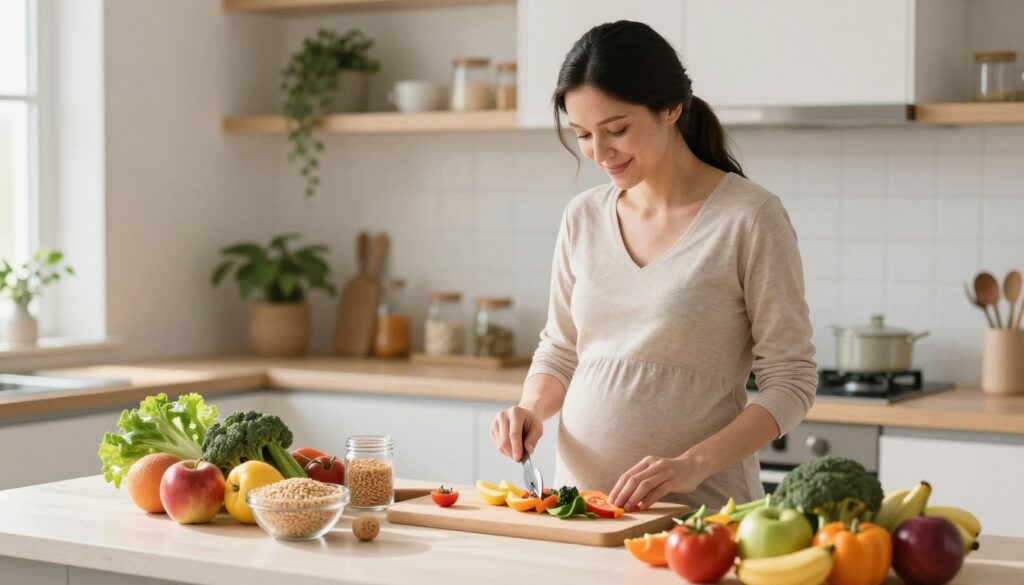
For more help with your diet during pregnancy, check out the American College of Obstetricians and Gynecologists. Or talk to a healthcare provider for advice just for you.
Importance of Prenatal Care
Knowing how important prenatal care is can make your pregnancy better. Going to regular check-ups with your healthcare provider is key. It helps watch your baby grow and spot problems early.
Prenatal care is not just for your baby. It’s also for you. Getting regular care helps keep you healthy too. This makes your pregnancy better and safer.

Finding the Right Healthcare Provider
Choosing the right healthcare provider is very important. You want someone you trust and feel comfortable with. They should listen to you and answer your questions.
Look for a provider with lots of pregnancy experience. They should care for you well and be easy to talk to. Ask friends, family, or other doctors for advice too.
Recommended Prenatal Visits
How often you see your healthcare provider changes as you get closer to your due date. Usually, you see them once a month in the first two trimesters. Then, you see them more often as your due date gets closer.
- In the first trimester, you’ll have a full health check and some tests.
- In the second and third trimesters, you’ll see your provider more often. They’ll check on your baby and your health.
- When you’re almost ready to have your baby, your provider will talk about birthing options with you.
Going to these prenatal visits helps keep you and your baby healthy. It’s a way to catch and fix any problems early.
Preparing for the Big Day
Getting ready for labor and delivery can feel scary. But with a good plan, you’ll feel more ready. As your due date gets closer, think about what you want for labor and delivery.
Creating a Birth Plan
A birth plan is a document that lists your wishes for labor, delivery, and aftercare. It helps your healthcare team know what you want. When making your birth plan, think about:
- Your pain management choices
- Any medical interventions you might want
- Your preferred labor positions
- How you want to push and deliver
- What you want right after the baby is born
Here’s an example of a birth plan:
| Category | Preferences |
|---|---|
| Pain Management | Breathing, massage, epidural |
| Labor Positioning | Walking, squatting, birthing ball |
| Delivery | Spontaneous pushing, delayed cord clamping |
Choosing a Birth Location
Choosing where to give birth is a big decision. It depends on your health, what you prefer, and your insurance. You can choose a hospital, birthing center, or home birth. Each has its own benefits and things to think about.
Hospital Birth: You get quick access to medical help and emergency care. Many hospitals have birthing suites that feel more like home.
Birthing Center: It’s like home but with midwives. Birthing centers are for low-risk pregnancies.
Home Birth: You can give birth at home, with your family around. It’s for low-risk pregnancies and needs a trained birth attendant.

By making a birth plan and picking a birth location, you’ll be more ready for the big day. Remember, things can change during labor and delivery. Being flexible is important.
Staying Active: Safe Exercises
When you’re pregnant, the right exercises can make you feel better. Being active is good for your body and mind. It can ease back pain, lift your mood, and boost your energy.
Benefits of Prenatal Yoga
Prenatal yoga is a great way to stay active while pregnant. It makes you more flexible, balanced, and strong. It also helps lower stress and anxiety, making your pregnancy calmer.
“Yoga during pregnancy can help women develop the physical and emotional resilience needed for childbirth and motherhood.”
Some key benefits of prenatal yoga are:
- Improved flexibility and balance
- Reduced stress and anxiety
- Enhanced strength and endurance for labor
- Better sleep quality
Walking and Other Low-Impact Options
Walking and other low-impact exercises are also safe and good during pregnancy. Walking is easy and can be done almost anywhere.
Other low-impact options include:
- Swimming or water aerobics
- Stationary cycling
- Low-impact aerobics classes designed for pregnant women
It’s important to listen to your body and pick exercises that feel right. Always talk to your healthcare provider before starting or continuing any exercise during pregnancy.
| Exercise | Benefits | Precautions |
|---|---|---|
| Prenatal Yoga | Improved flexibility, reduced stress | Avoid deep twists and bends |
| Walking | Low-impact, improves cardiovascular health | Watch for slippery surfaces, stay hydrated |
| Swimming | Low-impact, relieves joint pain | Avoid diving, ensure pool safety |
Managing Pregnancy Symptoms
Pregnancy symptoms can be tough, but there are ways to make them easier. As a mom-to-be, it’s key to manage these symptoms well. This makes your pregnancy journey healthier and more comfortable.
Tips for Morning Sickness
Morning sickness is common in early pregnancy. It affects many women. To help, eat small meals often. This keeps your stomach happy.
Avoid foods that are fatty, spicy, or high in sugar. They can make nausea worse. Ginger is good for nausea. You can drink ginger tea, ginger ale, or eat ginger candies.
Staying hydrated is also important. Drink small amounts of water all day. This stops dehydration.
Coping with Fatigue
Fatigue is another common symptom. It can make you feel really tired. To fight it, prioritize rest and sleep. Listen to your body and nap when you need to.
Try gentle exercises like prenatal yoga or short walks. They can give you more energy. Eating a balanced diet with iron and other nutrients helps too. Don’t push yourself too hard and ask for help when you can.
Building Your Support Network
You don’t have to go through pregnancy alone. Creating a support network can make a big difference. It gives you emotional support, practical help, and a sense of community.
Involving Family and Friends
Getting your family and friends involved is a great idea. They can offer emotional support and help with errands. They can also be there for you during this big change.
Here are some ways to involve your family and friends:
- Share your pregnancy journey with them through regular updates.
- Ask for help when you need it, whether it’s with household chores or running errands.
- Invite them to prenatal appointments or childbirth education classes.
Joining Support Groups
Joining a support group is also very helpful. Support groups offer a safe space to connect with others. You can share advice and get emotional support.
Consider the following benefits of joining a support group:
- Connect with others who understand your experiences.
- Gain valuable insights and advice from those who have been through similar situations.
- Feel less isolated and more supported throughout your pregnancy journey.
Here’s a comparison of different types of support groups you might consider joining:
| Type of Support Group | Benefits | Meeting Frequency |
|---|---|---|
| Online Support Groups | Convenient, accessible from anywhere, diverse community | Daily/Weekly |
| In-Person Support Groups | Face-to-face interaction, local community building | Weekly/Monthly |
| Specialized Support Groups | Focused on specific needs or experiences (e.g., first-time mothers, multiple pregnancies) | Varies |
Building a support network during pregnancy is a proactive step. It makes your experience healthier and happier. By involving your family and friends and joining support groups, you get emotional and practical support.
Educating Yourself About Labor
Knowing what to expect during labor can help you make good choices. Learning about labor is key to getting ready for motherhood.
Childbirth Classes Worth Considering
Childbirth classes are great for learning about labor. They cover topics like the stages of labor and pain management.
Some popular classes include:
- Lamaze technique classes
- Bradley Method classes
- Hypnobirthing classes
Helpful Resources and Books
There are many resources to learn about labor and delivery. Some good books are:
- “What to Expect When You’re Expecting” by Heidi Murkoff and Sharon Mazel
- “The Birth Partner” by Penny Simkin
- “Ina May’s Guide to Childbirth” by Ina May Gaskin
These books offer insights to help you feel ready and confident for your baby’s arrival.
| Resource | Description |
|---|---|
| Lamaze International | Offers childbirth education and resources on pain management and breathing techniques. |
| Bradley Method | Focuses on natural childbirth techniques and partner involvement. |
| Hypnobirthing | Teaches hypnosis and relaxation techniques for a more comfortable birthing experience. |
“The more you know about labor, the more confident you’ll feel about your birth experience.”
By learning about labor and delivery, you can feel more in control and ready for your baby’s arrival.
Getting Ready for Baby
As your due date gets closer, getting ready for your baby can be both fun and a bit scary. We’ve helped you understand your body during pregnancy and the need for prenatal care. Now, let’s talk about preparing for your baby’s arrival.
Must-Haves for Your Baby
Choosing the right baby gear is key. You’ll need a crib, a changing table, and a comfy nursing chair. IKEA, Graco, and Medela make great products for your baby. You can also register for gifts or buy second-hand to save money.
Creating a Soothing Nursery
Setting up the nursery is a chance to be creative and make a cozy space for your baby. Think about a calming color scheme, blackout curtains, and a cozy feel. Parenting blogs like Scary Mommy or Motherly have great tips on nursery design.
By focusing on these essentials, you’ll be ready for your baby’s arrival. Remember, preparing for baby is more than just the nursery or gear. It’s about creating a loving space for your new addition.
FAQ
What are the most important things to consider when it comes to nutrition during pregnancy?
Eating well is key during pregnancy. Eat foods like leafy greens, lean proteins, and whole grains. Avoid foods with too much sugar, salt, and bad fats. Taking prenatal vitamins can also help.
How often should I have prenatal check-ups?
You need regular check-ups to watch your baby grow. You’ll see your doctor every month in the first two trimesters. As your due date gets closer, you’ll go more often. Your doctor will tell you when to come in.
What are some safe exercises to do during pregnancy?
Being active is good for you and your baby. Try prenatal yoga, walking, and other easy exercises. Always talk to your doctor before starting any new exercise.
How can I manage morning sickness?
Morning sickness is common. Eat small meals often, avoid strong smells, and drink lots of water. Vitamin B6 and ginger products can also help.
What should I include in my birth plan?
A birth plan lists your wishes for labor and delivery. Include what you want for pain relief, labor positions, and caring for your newborn. Talk it over with your doctor to make sure everyone agrees.
How can I build a support network during pregnancy?
Having a support network helps a lot. Talk to family and friends, join online groups, and meet other moms-to-be. It makes pregnancy better.
What are the essential items to include in my baby gear?
Get the basics like diapers, onesies, and a crib. You might also want a baby monitor, breast pump, and carrier. These make caring for your baby easier.
How can I prepare for labor and delivery?
Learning about labor and delivery helps you feel ready. Take classes, read books, and talk to your doctor. It helps you feel more confident.
What are some tips for setting up the nursery?
Make the nursery safe and comfy for your baby. Get a crib, changing table, and storage for diapers and clothes. Add personal touches like mobiles and artwork for a cozy feel.
How can I cope with fatigue during pregnancy?
Fatigue is common. Stay active, take breaks, and rest when needed. Try deep breathing or meditation to fight fatigue.