
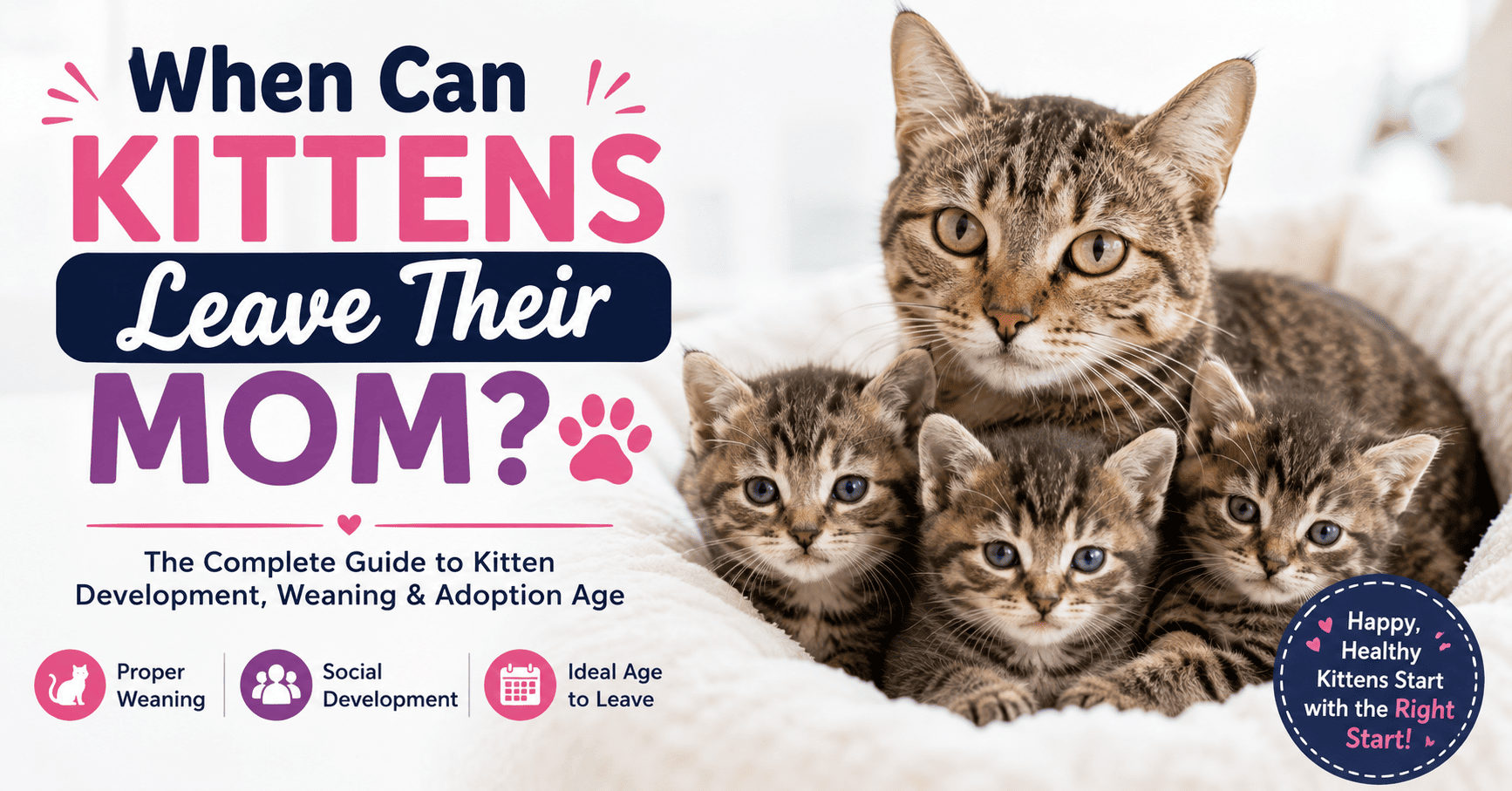
Learn when kittens can leave their mother, why timing matters, and how proper weaning and socialization help kittens grow into healthy cats.
When Can Kittens Leave Their Mom?
If you’re thinking of adopting a kitten, one of the most important questions to ask is: When can kittens leave their mom?
Many people assume that once a kitten starts eating on its own, it is ready for a new home. However, nutrition is only one part of a kitten’s development. Young kittens rely on their mother for food, warmth, protection, socialization, and important life lessons.
Removing a kitten too early can affect its behavior, health, and emotional development. Understanding the right age for kittens to leave their mother helps ensure they grow into healthy and well-adjusted cats.
Whether you are adopting from a breeder, rescuing a stray kitten, or caring for a litter of kittens, knowing the proper timeline is essential.
Why Mother Cats Are So Important
A mother cat does much more than feed her babies.
During the first several weeks of life, kittens depend on their mother for nearly everything. Newborn kittens cannot regulate their body temperature properly, and they rely on their mother’s milk for nutrition and immune protection.
The mother’s milk contains antibodies that help protect kittens from illness during the early stages of life.
Beyond nutrition, mother cats teach important skills that help kittens become confident and socially healthy adult cats.
A kitten learns how to groom itself, interact with other cats, use the litter box, and understand social boundaries.
These lessons are critical for long-term cat behavior and emotional development.
Understanding the Early Life Stage of a Kitten
The first few weeks are one of the most important periods in a kitten’s life.
During this early life stage, kittens grow rapidly and experience major developmental changes.
At birth, kittens are completely dependent on their mother.
Their eyes and ears remain closed for several days, and they spend most of their time nursing and sleeping.
As the weeks pass, they become more active and begin exploring their surroundings.
Every stage contributes to their physical and emotional growth.
This is why experts strongly recommend allowing kittens to remain with their mother throughout the crucial developmental period.
Week-by-Week Development Guide
Understanding how kittens develop can help determine when they are ready to leave their mother.
Birth to 2 Weeks
Newborn kittens depend entirely on their mother.
They receive all nutrition from their mother’s milk and spend most of their time sleeping.
Their eyes gradually begin opening around one to two weeks of age.
3 to 4 Weeks Old
At around 4 weeks old, kittens become more mobile.
They start exploring the area around their nest and interacting with littermates.
This is also when the kitten’s weaning process may begin.
Many kittens show interest in food served in a shallow or flat saucer.
5 to 6 Weeks Old
At this stage, kittens become playful and curious.
They begin eating small amounts of solid food while continuing to nurse from their mother.
Many kittens start using a litter box and practicing grooming habits.
Although they seem more independent, they still benefit greatly from their mother’s care.
7 to 8 Weeks Old
Most kittens are nearly or completely weaned by this age.
They can eat kitten food, drink water independently, and use the litter box consistently.
Many organizations consider 8 weeks old the minimum age at which a kitten can leave their mother.
However, development does not stop at eight weeks.
9 to 12 Weeks Old
This period is extremely important for social development.
Kittens continue learning from their mother and littermates.
They learn social cues, play behavior, bite inhibition, and how to interact appropriately with other cats.
Many breeders believe kittens are best placed in a new home at 12 weeks old because they are more emotionally mature.
At What Age Can Kittens Leave Their Mother?
The short answer is that kittens should remain with their mother until they are at least 8 weeks old.
However, many veterinarians and breeders recommend waiting until 12 weeks old whenever possible.
A kitten that leaves too early may miss valuable learning experiences.
While a kitten may be physically capable of surviving without its mother at eight weeks, emotional and social growth continues well beyond that age.
For this reason, experts often consider 12 weeks the ideal age for adoption.
Why 8 Weeks Is the Minimum Age
The reason 8 weeks is commonly used as the minimum age is that most kittens are:
- Fully weaned
- Eating solid food
- Drinking independently
- Using the litter box
- Developing normal play behavior
At this point, the kitten no longer depends on nursing for nutrition.
However, just because a kitten is physically independent does not mean it has finished learning from its mother.
That is why many professionals encourage keeping kittens together slightly longer whenever possible.
Understanding the Weaning Process
Weaning kittens refers to the transition from milk to solid food.
This process usually begins around 4 weeks old.
The mother naturally starts spending less time nursing while encouraging her kittens to explore other food sources.
Caregivers may introduce soft canned food mixed with water or kitten formula.
Over time, kittens begin eating larger amounts of food and nursing less frequently.
Eventually, they become completely independent eaters.
The weaning process should happen gradually.
Forcing weaning too early can cause nutritional and emotional stress.
Signs a Kitten Is Fully Weaned
Many new cat owners wonder how to know if a kitten is weaned.
A kitten is weaned when it:
- Eats solid food regularly
- Drinks water independently
- Maintains healthy body weight
- No longer relies on nursing
- Shows interest in normal kitten activities
Most kittens become completely weaned around eight weeks of age.
Even after weaning, they still benefit from spending additional time with their mother and littermates.
Why Socialization Matters
Socialization is one of the most overlooked reasons kittens should remain with their mother.
Young kittens learn important behaviors through observation and interaction.
The mother teaches them boundaries and appropriate behavior.
Littermates help teach play manners.
Without these experiences, kittens may struggle to socialize properly.
They may become fearful, aggressive, or overly dependent.
Strong social development helps kittens become friendly and adaptable adult cats.
Separating Kittens Too Early
Separating kittens from their mother before they are ready can create lasting problems.
Kittens that experience early separation may develop:
- Anxiety
- Fearfulness
- Excessive vocalization
- Aggressive play
- Poor social skills
- Separation anxiety
- Litter box issues
Veterinarians frequently see behavior problems linked to kittens that were left with their mother too soon.
Patience during the first few months often prevents these issues later.
Can a Kitten Leave Its Mother at 6 Weeks?
Many people ask if a kitten can leave its mother at six weeks.
While some kittens may appear independent at this age, experts generally advise against it.
A six-week-old kitten is still developing socially and emotionally.
The kitten may be eating solid food, but continues learning valuable lessons from its mother and littermates.
Most animal welfare organizations recommend waiting until at least eight weeks.
What Happens Between 8 and 12 Weeks?
The period between eight weeks and 12 weeks is often underestimated.
During these weeks, kittens continue learning:
- Social cues
- Play boundaries
- Grooming habits
- Confidence around different sights
- How to interact with other cats
These experiences help create a more confident and well-adjusted adult cat.
Many professional breeders intentionally keep kittens until 12 weeks old for this reason.
Feral Kittens and Stray Kittens
The situation can be different when dealing with feral kittens or abandoned kittens.
A stray kitten may not have access to its mother, which changes the care requirements significantly.
Before intervening, it’s important to determine whether the mother cat is truly absent. Mother cats often leave briefly to search for food and may return later.
If newborn kittens appear healthy and warm, the best option is usually to monitor from a safe distance and wait for the mother to return.
However, if kittens are cold, injured, dehydrated, or obviously abandoned, immediate intervention may be necessary.
In these situations, caregivers often need to bottle feed kittens and provide the care that would normally come from their mother.
Orphaned kittens require much more attention than kittens raised by a mother cat.
Caring for Orphaned Kittens
When kittens lose their mother, humans must step in to provide critical support.
Young kittens require:
- Frequent feeding
- Warmth
- Stimulation to eliminate waste
- Socialization
- Veterinary care
Very young kittens cannot eat regular cat food.
Special kitten formula is necessary because cow’s milk does not provide proper nutrition and may cause digestive problems.
As orphaned kittens grow, caregivers gradually introduce food in a flat saucer and begin the kitten weaning process.
Although humans can provide excellent care, it is difficult to fully replace everything a mother cat teaches.
This is why socialization becomes especially important for orphaned kittens.
Preparing for Adopting a Kitten
If you’re thinking of adopting a kitten, preparation can make the transition much smoother.
A new home feels exciting but also overwhelming to a young kitten.
Everything is unfamiliar, including sounds, smells, people, and surroundings.
Creating a safe environment helps reduce stress and allows the kitten to adjust more comfortably.
Before bringing a kitten home, gather essential supplies.
Kitten Essentials Checklist
- Quality kitten food
- Food and water bowls
- Litter box
- Litter
- Soft bedding
- Scratching post
- Toys
- Carrier
- Grooming tools
Having these items ready before adoption helps ensure a smooth transition.
Creating a Safe New Environment
A new environment can feel intimidating for a young kitten.
Many experts recommend starting with a small room rather than giving access to the entire house immediately.
This allows the kitten to explore gradually and build confidence.
Keep dangerous items out of reach, including:
- Electrical cords
- Toxic plants
- Cleaning chemicals
- Small objects that can be swallowed
As the kitten becomes more comfortable, you can slowly introduce additional areas of the home.
Helping Kittens Adjust Away From Mom
Moving away from mom can be stressful, even for kittens that are fully weaned.
During the first few days, kittens may:
- Cry more than usual
- Hide
- Eat less
- Sleep more
- Appear nervous
These behaviors are normal.
Patience is important.
Allow the kitten to explore at its own pace and avoid overwhelming it with too much attention.
Providing a consistent routine helps kittens feel secure.
Understanding Separation Anxiety
Some kittens experience mild separation anxiety after leaving their mother and littermates.
This is especially common when kittens are removed too early.
Signs may include:
- Excessive vocalization
- Clingy behavior
- Destructive scratching
- Changes in eating habits
Gradual socialization and positive experiences help reduce anxiety over time.
Kittens that remain with their mother until the recommended age are generally less likely to develop serious adjustment issues.
The Role of Littermates
Many people focus only on the mother cat, but littermates are also important teachers.
Kittens learn valuable lessons through play.
When one kitten bites too hard, another kitten reacts.
This teaches bite control and social boundaries.
Littermates also help kittens:
- Build confidence
- Practice communication
- Learn appropriate play behavior
- Develop social skills
A litter of kittens functions as an important learning environment.
This is one reason experts discourage separating kittens from both their mother and littermates too early.
Health Concerns in Young Kittens
Young kittens are vulnerable to illness.
Their immune systems are still developing, making proper veterinary care essential.
Common health concerns include:
- Parasites
- Respiratory infections
- Digestive problems
- Dehydration
- Nutritional deficiencies
Early veterinary visits help identify and address problems before they become serious.
If you’re adopting a kitten, schedule a checkup shortly after bringing it home.
Vaccinations and Preventive Care
Vaccinations play an important role in protecting kittens from disease.
Your veterinarian will recommend a vaccination schedule based on the kitten’s age and health status.
Preventive care may include:
- Vaccinations
- Deworming
- Flea prevention
- Health examinations
These measures help support long-term wellness.
Responsible cat owners work closely with their veterinarian to ensure their kitten receives proper medical care.
Spaying and Neutering
As kittens grow, veterinarians often recommend having them spayed or neutered.
These procedures help prevent unwanted litters and may reduce certain health and behavioral issues.
The appropriate timing depends on veterinary recommendations and local guidelines.
Discuss the best plan with your veterinarian.
Common Mistakes New Cat Owners Make
New cat owners often make mistakes simply because they lack experience.
Some common errors include:
Bringing a Kitten Home Too Early
This remains one of the biggest mistakes.
A kitten that leaves before at least 8 weeks old may face developmental challenges.
Changing Food Too Quickly
Sudden diet changes can upset a kitten’s digestive system.
Transition gradually whenever possible.
Ignoring Socialization
Positive experiences with people, sounds, and environments help create confident adult cats.
Skipping Veterinary Care
Regular checkups are essential for healthy development.
How Kittens Grow Into Adult Cats
Watching kittens grow is one of the most rewarding parts of pet ownership.
Over the first year, kittens undergo rapid physical and behavioral changes.
They develop:
- Adult teeth replacing baby teeth
- Stronger muscles
- Improved coordination
- Greater independence
Healthy development depends heavily on the experiences kittens receive during their first weeks and months of life.
The lessons learned from their mother continue shaping behavior long after adoption.
Frequently Asked Questions
When can kittens leave their mother safely?
Most experts recommend waiting until at least 8 weeks old. Many veterinarians and breeders prefer 12 weeks old for optimal social development.
Can kittens leave their mom at 7 weeks?
Seven weeks is generally considered too early. Most kittens still benefit from spending additional time with their mother and littermates.
Why do kittens need their mother after they stop nursing?
Even after a kitten is fully weaned, the mother continues teaching social skills, grooming habits, boundaries, and communication.
Is 12 weeks better than 8 weeks?
In many cases, yes. Kittens that remain with their mother until 12 weeks often develop stronger social skills and greater confidence.
What if I find newborn kittens without a mother?
Observe before intervening. The mother may return. If the kittens are abandoned or in danger, contact a veterinarian or animal rescue organization for guidance.
Do all kittens need a litter box immediately?
Most kittens begin learning litter training naturally from their mother and littermates during early development.
Conclusion
So, when can kittens leave their mom?
While kittens can generally leave once they are at least 8 weeks old, many experts agree that waiting until 12 weeks old provides important benefits for emotional, behavioral, and social development.
A mother cat offers much more than nutrition. She teaches grooming, communication, social boundaries, and confidence. Littermates also play an essential role in helping kittens learn how to behave appropriately.
Avoiding early separation helps create healthier and more well-adjusted cats.
If you’re adopting a kitten, patience is one of the greatest gifts you can give your new companion. Allowing kittens to stay with their mother long enough can lead to a lifetime of better health, stronger social skills, and happier relationships with their human families.