

Baby sleep schedule guide by age. Learn naps, night sleep, routines, and tips to help your baby sleep better.
Bringing a new baby home is exciting, but it also comes with many questions about sleep. One day your baby seems to sleep all the time, and the next day they refuse to nap for more than a few minutes. If you’re feeling confused, you’re not alone. Almost every parent experiences sleep struggles during the first year of their baby’s life.
Every newborn baby has unique sleep needs. Some babies settle quickly, while others need more comfort before they can rest peacefully. Learning about baby sleep helps parents understand what is normal and what to expect during each stage of development. As your newborn baby’s sleep patterns gradually mature, you’ll find it easier to keep your baby on a sleep schedule that matches their age and developmental needs.
The good news is that understanding your baby’s sleep schedule can make life much easier. While every child is unique, babies generally follow predictable sleep patterns as they grow. Learning how much sleep your baby needs at each stage allows you to create a schedule that works for your family without unnecessary stress.
During the first few months of life, babies spend most of their time sleeping because sleep plays a vital role in brain growth, physical development, memory, and emotional well-being. Establishing healthy sleep habits early can improve your baby’s sleep quality, encourage regular sleep cycles, and help everyone in the family get more rest.
Whether you have a newborn light sleeper, a baby who wakes frequently at night, or you’re simply looking for practical sleep tips, this guide covers everything you need to know. You’ll learn about safe sleep, age-appropriate routines, common sleep challenges, and expert advice for creating an effective infant sleep schedule.
Why Sleep Is Essential During Your Baby’s First Year
Sleep is much more than rest. It is one of the most important parts of healthy growth and development.
During sleep, your baby’s brain processes new information, builds neural connections, strengthens memory, and releases important growth hormones. Researchers have found a strong connection between sleep and development, especially during infancy when the brain grows at an incredible pace.
A well-rested baby is more likely to:
- Feed well
- Gain weight normally
- Learn new skills
- Stay emotionally calm
- Have better attention during awake periods
- Develop healthy routines
Parents also benefit from better sleep. When your baby follows a more predictable routine, it becomes easier to plan feeding, playtime, and family activities.
Understanding Baby Sleep Patterns
Many parents expect babies to sleep through the night within a few weeks. In reality, newborn sleep is very different from adult sleep.
Babies spend much of their sleep in active sleep, which explains why you may notice a newborn moving during sleep or a newborn twitching while sleeping. Small movements, facial expressions, smiles, stretching, and gentle jerks are usually normal signs of developing sleep cycles.
Some babies are also naturally a newborn light sleeper. They may wake easily from noise, bright lights, or temperature changes. This doesn’t necessarily mean something is wrong; it simply reflects their developing nervous system.
As babies mature, their sleep gradually becomes more organized with regular sleep cycles, longer periods of night sleep, and fewer nighttime awakenings.
How Much Sleep Does a Baby Need?
The amount of sleep your baby needs changes rapidly during the first year.
Although every child is different, most newborns sleep between 14 and 17 hours of sleep every 24 hours. These hours are divided into many short naps because newborns need frequent feeding.
As babies grow older, daytime naps become fewer while nighttime sleep becomes longer and more consistent.
Instead of focusing on exact hours, watch your baby’s behavior. A happy, alert baby who feeds well is usually getting enough rest.
Safe Sleep Guidelines Every Parent Should Know
Creating a secure sleeping environment is one of the most important responsibilities for parents.
Experts recommend following safe sleep practices every time your baby sleeps, whether it’s during naps or overnight.
Always Follow the “Back to Sleep” Rule
The safest position is to place your baby on their back every time they sleep.
The Back to Sleep recommendation has significantly reduced the risk of sudden infant sleep-related deaths. Even if your baby rolls over independently later in infancy, you should always begin sleep by placing your baby on their back.
Choose a Safe Sleep Surface
A firm, flat sleep surface is essential.
Use a safety-approved crib or bassinet with a fitted sheet. Avoid soft pillows, heavy blankets, stuffed toys, and loose bedding because they increase safety risks.
Following these safe tips helps create the safest possible sleep environment.
Newborn Bassinet Sleep: What Parents Should Know
Many families choose a bassinet during the first few months because it keeps the baby close for nighttime feeding.
Newborn bassinet sleep offers convenience, especially during the early weeks, but safety should always come first.
For safe bassinet sleeping:
- Use only the mattress provided by the manufacturer.
- Keep the bassinet free of pillows and blankets.
- Place your baby on their back.
- Stop using the bassinet once your baby reaches the recommended weight limit or begins rolling over.
A bassinet is designed to provide a secure sleeping space, not a place for prolonged play or supervised lounging.
Swaddling and Better Sleep
Many newborns sleep better when parents swaddle their baby correctly.
Swaddling recreates the cozy feeling of the womb and helps reduce the startle reflex that often wakes newborns unexpectedly.
However, swaddling should always be done safely.
Stop swaddling once your baby shows signs of rolling over. At that stage, sleeping with free arms is much safer.
If your baby dislikes swaddling, don’t worry. Every child is different, and some babies naturally prefer sleeping without it.
Creating an Infant Sleep Schedule
A strict timetable isn’t necessary during the newborn stage.
Instead, build an infant sleep schedule around your baby’s natural feeding and sleeping cues.
Watch for signs that your baby is ready for sleep, such as:
- Rubbing eyes
- Yawning
- Looking away
- Becoming quiet
- Fussiness
- Slower movements
Putting your baby down before they become overtired often makes it easier for your baby to fall asleep.
If your baby cries, try soothing techniques like gentle rocking, soft singing, or white noise before assuming they’re not tired.
Consistency matters more than perfection.
Helping Your Baby Sleep Naturally
One of the biggest goals for parents is to help their baby sleep without creating unnecessary stress. Start with simple routines, watch your baby’s sleepy cues, and provide a calm sleep environment. Small, consistent habits can help your baby sleep better over time. Every baby responds differently, so focus on gentle routines instead of expecting immediate results.
Newborn Sleep Schedule (0–2 Months)

During the first two months, sleep is unpredictable.
Your baby may sleep anywhere from 30 minutes to four hours at a time before waking to feed.
Typical characteristics include:
- Frequent daytime naps
- Short wake windows
- Multiple night feedings
- Irregular sleep patterns
- Developing circadian rhythm
Don’t worry if your baby is awake several times each night. Frequent waking is biologically normal at this stage.
Rather than forcing a schedule, focus on feeding, comforting, and allowing your baby to sleep whenever they show signs of tiredness.
Baby Sleep Schedule (2–4 Months)
Between two and four months, many babies begin developing more organized sleep habits.
You may notice:
- Longer periods of night sleep
- More predictable daytime sleep
- Fewer overnight feedings
- Longer naps
- Improved sleep quality
This is an excellent time to introduce gentle bedtime routines.
A simple routine might include:
- Feeding
- Bath (optional)
- Dim lights
- Quiet cuddles
- Story or lullaby
- Put your baby into the crib while drowsy but still awake.
These repeated steps teach babies that bedtime is approaching.
Remember, there is no perfect routine. The best routine is the right schedule that fits your baby’s personality and your family’s lifestyle.
Every Baby Is Different

One of the biggest mistakes parents make is comparing their baby with others.
Some babies naturally need less sleep, while others require more than average.
Some babies begin sleeping longer stretches early, while others continue waking throughout the first year.
This doesn’t necessarily mean something is wrong.
Avoid chasing the “perfect” routine. Instead, aim for a consistent schedule that supports your child’s natural rhythms.
If your baby’s sleep seems very unusual or you’re concerned about feeding, growth, or excessive sleepiness, speak with your pediatrician.
For families experiencing ongoing sleep problems, working with a certified sleep consultant who specializes in pediatric sleep or sleep consulting can sometimes provide personalized guidance tailored to your baby’s needs.
Baby Sleep Schedule (4–6 Months)
Around this age, many families begin thinking about sleep training. While every baby develops differently, gentle and age-appropriate approaches may help encourage healthy sleep habits. Before starting any sleep training method, make sure your baby is developmentally ready and discuss any concerns with your pediatrician.
Between four and six months, many babies begin following a more predictable routine. This stage is exciting because longer stretches of night sleep become more common, and naps gradually settle into a consistent pattern.
Although every baby develops differently, most babies at this age sleep around 12 to 16 hours in 24 hours. This includes both nighttime sleep and daytime sleep.
A typical day may look like this:
- Wake up around 6:30–7:30 a.m.
- Morning nap
- Midday nap
- Late afternoon catnap (for some babies)
- Bedtime between 7:00–8:00 p.m.
Don’t worry if your baby’s schedule doesn’t look exactly like this. The goal is to create a schedule that works for your family while following your baby’s natural sleep cues.
At this age, many babies become more aware of their surroundings. Bright lights, noise, and exciting activities can make it harder for them to settle. Creating a calm bedtime routine every evening helps signal that it’s time for sleep.
Baby Sleep Schedule for 6 Months Old
By 6 months old, many babies are ready for a more predictable daily routine.
Parents often ask whether their baby should still wake for nighttime feedings. The answer depends on your baby’s growth, feeding habits, and advice from your healthcare provider. Some babies continue needing one night feeding, while others sleep longer without eating.
A typical 6-month-old schedule often includes:
- Wake up around 7:00 a.m.
- Morning nap
- Afternoon nap
- Early bedtime
Around 6 months of age, many babies transition toward a 2-nap schedule, although some still need a short third nap occasionally.
This is also a period when sleep can temporarily become difficult because babies are learning new skills like rolling, sitting, and crawling. These exciting milestones sometimes lead to temporary sleep disruptions.
Remain patient and continue following your bedtime routine. Most babies return to better sleep once they adjust to their new developmental skills.
Baby Sleep Schedule (6–9 Months)
By now, many babies have established a predictable nap schedule with two daytime naps and longer nighttime sleep. Although occasional changes are expected because of teething or developmental milestones, maintaining a consistent nap routine helps support better overnight sleep.
Between six and nine months, babies become increasingly active.
They spend more time crawling, exploring, laughing, and interacting with family members. All this activity means sleep remains incredibly important for healthy growth.
During this period, many babies sleep:
- 10–12 hours overnight
- Two daytime naps
- Around 13–15 total hours every day
Parents often notice their baby’s regular sleep cycles becoming more predictable.
However, separation anxiety often begins around this age.
You may put your baby into the crib only to hear your baby cry moments later because they want comfort.
This behavior is completely normal and doesn’t mean you’re doing anything wrong.
Offer reassurance while maintaining your bedtime routine. Consistency helps babies feel secure.
Baby Sleep Schedule (9–12 Months)
By nine months, many babies have settled into a reliable sleep routine.
Most babies continue taking two naps each day while enjoying longer periods of uninterrupted night sleep.
A common schedule includes:
- Wake up
- Morning nap
- Afternoon nap
- Bedtime around 7:00–8:00 p.m.
During this stage, some babies experience temporary sleep setbacks because of:
- Teething
- Learning to stand
- Pulling up in the crib
- Separation anxiety
- Minor illnesses
These changes are temporary.
Continue following a calm bedtime routine and avoid making major changes unless necessary.
Remember that consistency usually produces better long-term results than constantly changing routines.
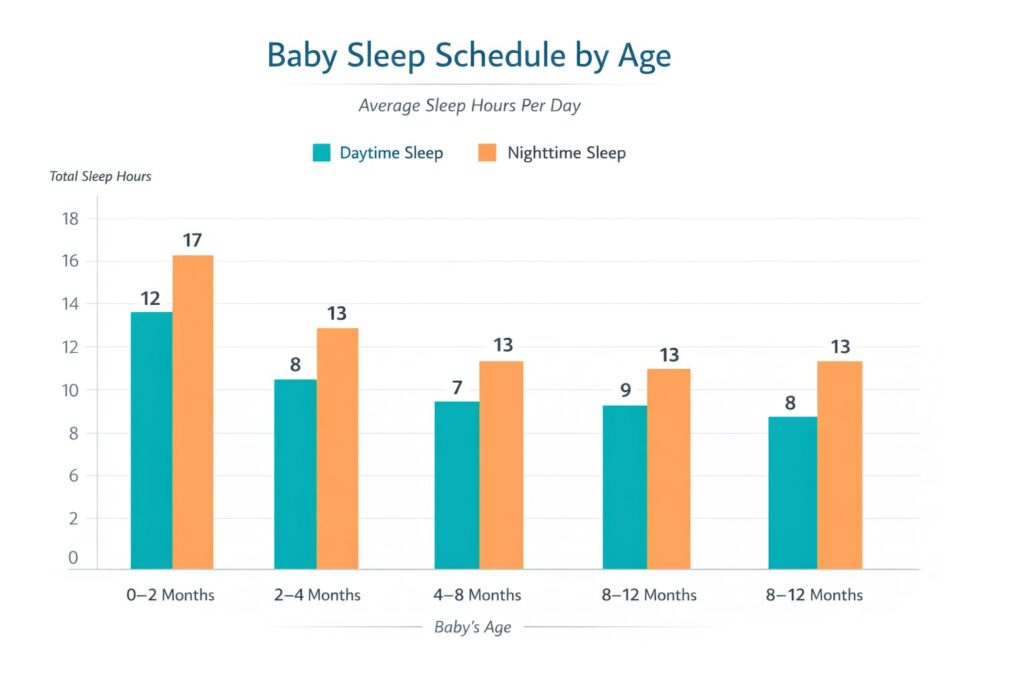
Baby Sleep Schedule Chart (0–12 Months)
A simple infant sleep chart can guide you. It shows how much babies sleep at different ages. This helps you plan a realistic baby nap schedule and understand changes in sleep.
 |
Month-Old Sleep Schedule Guide
Parents frequently search for the ideal month-old sleep schedule, but it’s important to remember that every child develops differently.
Instead of following rigid timetables, think of age-based schedules as flexible guides.
Your baby’s schedule may differ because of:
- Feeding needs
- Growth spurts
- Temperament
- Medical conditions
- Family routines
The best routine is one that supports healthy sleep while remaining realistic for everyday life.
Helping Your Baby Fall Asleep

As your baby grows, you may gradually encourage them to sleep alone in their own safe sleep space. This doesn’t mean leaving your baby without comfort. Instead, it means helping them develop the confidence to settle independently while knowing you’re always nearby when needed.
One of the biggest goals isn’t simply getting your baby to fall asleep; it’s helping them learn healthy sleep habits over time.
Simple strategies include:
- Keeping bedtime consistent
- Dimming lights before bed
- Reducing stimulating activities
- Using gentle white noise
- Feeding before bedtime
- Offering cuddles and reassurance
Try to put your baby into the crib when they are drowsy but not fully asleep, whenever possible.
This helps them gradually learn to settle themselves when they naturally wake between sleep cycles.
Remember, this is a skill that develops over time.
What If Your Baby Wakes During the Night?
Night waking is completely normal during infancy.
Even adults briefly wake several times every night.
The difference is that adults usually fall go back to sleep without realizing it.
Babies are still learning this skill.
If your baby wakes overnight:
- Wait a moment before responding.
- Check if feeding is needed.
- Keep lights dim.
- Speak softly.
- Avoid stimulating play.
Many babies naturally learn to connect sleep cycles as they mature.
Common Sleep Problems During the First Year
Almost every family experiences some sleep problems during infancy.
Common challenges include:
Frequent Night Wakings
These may occur because of hunger, illness, teething, developmental milestones, or temporary sleep regressions.
Short Naps
Many babies take short naps during the first several months before naps gradually lengthen.
Early Morning Wake-Ups
Some babies naturally wake before sunrise.
Keeping the room dark and maintaining a consistent bedtime may help.
Overtiredness
Ironically, babies who stay awake too long often struggle to fall asleep.
Watching for sleepy cues helps prevent overtiredness.
Personalized Sleep Routines
No two babies are exactly alike.
Some parents wish there were a perfect baby sleep schedule generator that could instantly create the ideal routine.
While online tools can be helpful, they cannot fully understand your baby’s personality, feeding habits, growth, and family lifestyle.
The most effective routine is often a personalized sleep plan based on observing your own child.
Some families even create a personalized sleep and feeding schedule that combines naps, feeding times, outdoor walks, and play sessions into one flexible daily routine.
Sleep and Development Go Hand in Hand
Healthy sleep directly supports learning and development.
As babies grow, sleep strengthens:
- Memory
- Language development
- Emotional regulation
- Physical growth
- Brain development
- Immune function
This close relationship between sleep and development explains why babies often sleep more during periods of rapid growth.
Giving your baby enough opportunities for restful sleep is one of the best gifts you can offer.
When Should You Seek Professional Help?
While most sleep challenges are completely normal, there are times when additional support can be helpful.
Consider speaking with your pediatrician if your baby:
- Snores loudly every night
- Has breathing pauses during sleep
- Rarely sleeps
- Seems unusually sleepy throughout the day
- Is not gaining weight well
- Has persistent feeding difficulties
Some families also benefit from working with a certified sleep consultant.
Professional sleep consulting provides individualized guidance for families facing ongoing sleep struggles.
A qualified expert in pediatric sleep can help develop a realistic plan that fits your baby’s age and temperament while supporting healthy sleep habits.
Remember, asking for help is never a sign of failure. Parenting is challenging, and sometimes expert guidance makes the journey much easier.
Looking Ahead
By now you’ve learned how baby sleep changes from birth through the first year, how to build a flexible routine, manage common sleep challenges, and support healthy development.
Advanced Sleep Tips for Better Baby Sleep

Now that you understand how sleep changes during the first year, it’s time to focus on habits that encourage healthy, long-lasting sleep. Remember, there is no magic solution that works for every family. The goal is to build routines that help your baby feel safe, relaxed, and ready for sleep.
Here are some proven sleep tips that many parents find helpful:
1. Keep Bedtime Consistent
Babies thrive on routine. Putting your baby to bed at roughly the same time every evening helps regulate their internal body clock.
A predictable bedtime routine might include:
- A warm bath
- Feeding
- Reading a short story
- Gentle cuddles
- Soft music or white noise
- Placing your baby in the crib while drowsy
Over time, these repeated activities become signals that it’s time to sleep.
2. Watch for Sleep Cues
Don’t wait until your baby becomes overtired.
Common signs include:
- Yawning
- Rubbing eyes
- Looking away
- Fussiness
- Slower movements
- Quiet behavior
Responding to these signals early usually makes it easier for your baby to settle.
3. Create a Comfortable Sleep Environment
Your baby’s bedroom should encourage restful sleep.
Consider these safe practices:
- Keep the room comfortably cool.
- Use blackout curtains if needed.
- Reduce loud noises.
- Use white noise if it helps your baby relax.
- Keep the crib free of pillows, blankets, bumpers, and stuffed toys.
A calm environment supports better sleep quality throughout the night.
4. Encourage Healthy Sleep Associations
Many babies enjoy being rocked or fed to sleep, and that’s perfectly normal in the early months.
As your baby grows older, gently encouraging them to fall asleep in their crib while drowsy can help them become more comfortable settling independently between normal nighttime awakenings.
This doesn’t mean leaving your baby to cry for long periods. Instead, respond with comfort while gradually helping them build confidence at bedtime.
5. Don’t Compare Your Baby to Others
Every baby develops differently.
Some babies naturally sleep for longer stretches, while others wake more frequently well into their first year.
Comparing your child with friends’ babies or social media stories often creates unnecessary stress.
Focus on steady progress instead of perfection.
Transitioning from Baby Sleep to Toddler Sleep
As your child approaches their first birthday, sleep needs continue to change.
Toddler sleep looks different from infant sleep because toddlers become more independent, physically active, and curious about the world around them.
Around 12 to 18 months, many children begin transitioning from two naps to one daily nap.
This transition doesn’t happen overnight.
Some days your child may still need two naps, especially after illness, busy activities, or growth spurts.
The key is flexibility.
Continue offering regular opportunities for rest while adjusting your routine according to your child’s needs.
Whether you have a young infant, a baby or toddler, healthy sleep habits continue to support learning, behavior, emotional well-being, and physical growth.
Safe Sleep Myths vs. Facts
Parents receive plenty of advice from family, friends, and the internet. Unfortunately, not all of it is accurate.
Let’s separate common myths from facts.
Myth: Babies sleep better on their stomachs.
Fact: The safest sleeping position for healthy babies is on their back. Always place your baby on their back for every nap and nighttime sleep until they can roll independently.
Myth: Adding blankets keeps babies warmer and safer.
Fact: Loose blankets increase the risk of suffocation. Instead, dress your baby appropriately for the room temperature or use a wearable sleep sack.
Myth: Keeping babies awake longer helps them sleep better at night.
Fact: Overtired babies often have more difficulty falling asleep and staying asleep.
Following age-appropriate wake windows generally leads to better sleep.
Myth: Every baby should sleep through the night by three months.
Fact: Sleep development varies greatly. Some babies sleep longer stretches early, while others continue waking for several months.
Both can be completely normal.
Frequently Asked Questions
How many hours should a baby sleep?
Instead of focusing only on daytime naps or nighttime sleep, consider your baby’s total sleep over 24 hours. Some babies sleep more during the day, while others naturally prefer longer stretches at night. Looking at total sleep gives a better picture of whether your baby is getting enough rest.
Sleep needs depend on age.
Most newborns sleep between 14 and 17 hours each day, while older infants gradually sleep less during the day and more at night.
When should I start a sleep schedule?
You can begin encouraging healthy routines from birth by following your baby’s natural sleep cues.
More predictable schedules often develop between 6 and 8 weeks of age.
Should I wake my baby from naps?
If your healthcare provider has no concerns about feeding or weight gain, many babies can be allowed to wake naturally.
However, very long daytime naps may occasionally interfere with bedtime.
If you’re unsure, ask your pediatrician.
Is it normal for babies to wake during the night?
Yes.
Night waking is completely normal throughout infancy.
Most babies gradually learn to sleep for longer stretches as their brains mature.
What if my baby won’t sleep in the crib?
Many babies need time to adjust.
Practice consistent bedtime routines, provide reassurance, and create a calm sleep environment.
With patience, most babies become more comfortable sleeping independently.
When should I seek help?
Contact your pediatrician if your baby has:
- Difficulty breathing during sleep
- Poor weight gain
- Persistent feeding problems
- Extremely unusual sleep patterns
- Ongoing sleep difficulties that concern you
Early guidance can provide reassurance and identify any underlying issues.
Common Mistakes Parents Should Avoid
Even experienced parents sometimes make small mistakes that affect sleep.
These include:
- Changing bedtime every night.
- Skipping naps.
- Waiting too long before bedtime.
- Creating overly stimulating bedtime routines.
- Expecting adult-like sleep too early.
- Comparing your baby’s sleep with other children.
Instead, focus on consistency, patience, and realistic expectations.
Final Thoughts
Your baby’s first year is filled with incredible growth, exciting milestones, and changing sleep patterns. While there will be nights that feel challenging, remember that healthy sleep develops gradually.
The most successful families don’t follow a perfect schedule—they follow a flexible routine that meets their baby’s changing needs.
Create a calm bedtime routine, provide a safe sleep environment, watch for sleepy cues, and allow your baby time to develop healthy sleep habits naturally.
There will be periods of smooth sleep and periods of temporary setbacks caused by growth spurts, teething, illness, or developmental milestones. These phases are a normal part of childhood and usually pass with time.
Most importantly, trust yourself.
You know your baby better than anyone else.
Celebrate small improvements, stay patient during difficult nights, and remember that every restful nap and peaceful bedtime supports your baby’s physical growth, brain development, emotional well-being, and overall health.
With love, consistency, and realistic expectations, you’ll build healthy sleep habits that benefit your child not only during infancy but for many years to come.