

Explore the psychological effects of being raised by a single mother, including mental health, behavior, and emotional development insights.
Growing up in single-mother families shapes a child in powerful ways. You might wonder how daily life, stress, and love combine to influence young minds. The psychological effects of being raised by a single mother often reflect both struggle and strength.
In the United States, millions of children live in single-parent homes. Research shows clear links between Family structure and emotional growth. Still, outcomes depend on parenting behaviors, support systems, and the overall Family environment, which influences a child’s experiences.
1: Understanding Single Mother Parenting

Single motherhood is more common than ever. Many families form this way due to divorce, separation, or personal choice. When comparing Cohabitating mothers vs single mothers, the daily load differs. A single parent often manages work, home, and emotional care alone.
These realities create unique parenting stress factors. Over time, this pressure may affect maternal mental health. However, strong emotional support in parenting can still create a stable and loving home that nurtures a child’s growth.
2: How Single-Parent Households Shape Child Development
Childhood is shaped by environment and care. In single-mother families, routines may often change. This affects child behavioral development and emotional learning. Children adapt quickly, yet stability still matters deeply.
The impact of family structure becomes clearer in the early years. When parental involvement remains high, children thrive. However, inconsistent schedules or a lack of parental involvement can lead to confusion, which can shape long-term behavior and thinking patterns.
3: Psychological Effects on Children
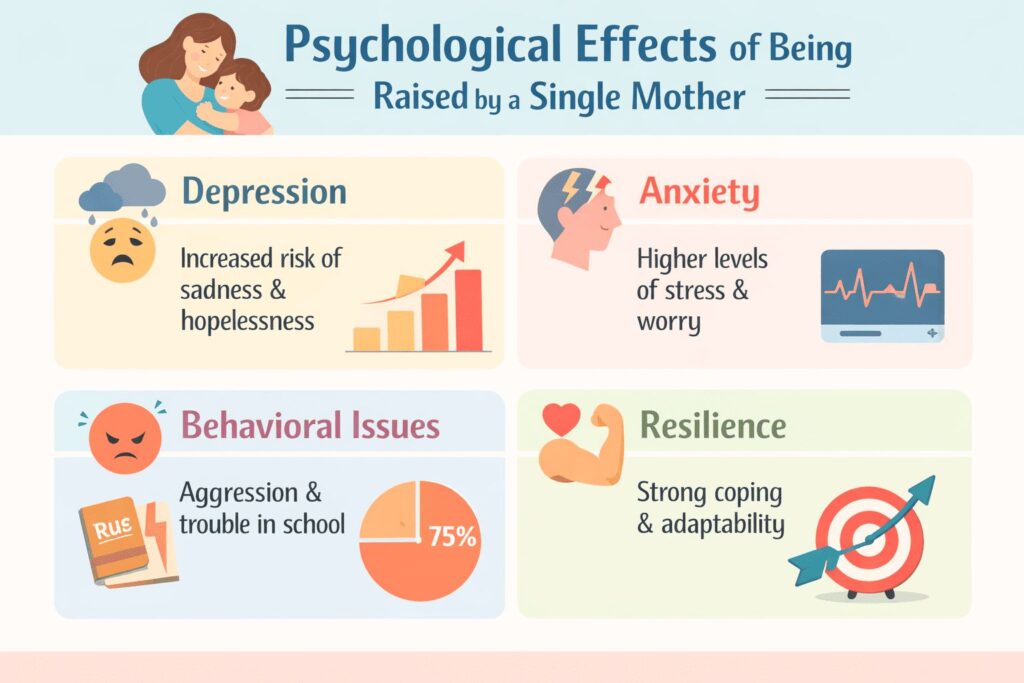
The psychological effects of being raised by a single mother vary widely. Some children develop independence early. Others struggle with internalizing symptoms such as sadness or worry.
Emotions often reflect the home environment. Exposure to childhood stressful events may increase youth adjustment problems. Over time, these challenges can shape personality, coping style, and emotional stability.
4: Effects on Adolescent Mental Health

Teen years bring rapid change. The psychological effects of being raised by a single mother become more visible during this stage. Teens face identity struggles, peer pressure, and emotional shifts.
Research highlights adolescent emotional development as highly sensitive. Many teens face adolescent mental health challenges and even emotional instability in teens. These issues are often linked to stress at home and evolving independence needs.
5: Risk of Depression in Children Raised by Single Mothers
Depression risk increases when stress builds over time. Studies highlight the Risk of depression in single-parent homes as linked to emotional gaps and pressure. This explains rising depressive symptoms in adolescents in some cases.
Gender plays a role, too. Experts note gender differences in depression, with girls more vulnerable to depression. Emotional strain, combined with psychological distress in families, can increase vulnerability during teenage years.
6: Anxiety and Emotional Insecurity in Adolescents
Anxiety often grows quietly. Many teens experience anxiety symptoms in children that evolve into long-term patterns. These feelings may stem from uncertainty or lack of stability.
Attachment plays a major role. Weak parent-child relationship quality may create fear and insecurity. Over time, this leads to emotional sensitivity in adolescent girls and highlights Boys vs. Girls Mental Health Differences in coping styles.
7: Behavioral and Social Challenges

Behavior reflects inner emotions. Some children show behavioral problems in adolescence, including anger or withdrawal. Others face social adjustment issues at school or with peers.
In serious cases, risks include conduct disorder and ADHD. These are forms of externalizing disorders in children. When combined with stress, they create lasting developmental challenges in teens.
8: The Role of Parenting Style and Mother-Child Relationship
Parenting style shapes everything. Warm care builds trust, while psychologically controlling parenting limits independence. This reflects the ongoing struggle of parental control vs autonomy.
Negative patterns like maternal rejection or harsh parenting practices harm emotional growth. In contrast, emotionally supportive parenting improves outcomes. Strong bonds improve parenting styles and outcomes and reduce long-term risks.
9: Economic and Social Stress Factors
Financial stress affects families deeply. The effects of poverty on children often appear in emotional and behavioral struggles. Many single parents face financial stress in single-parent families daily.
Limited help adds pressure. A lack of social support increases stress levels. This highlights the Impact of parental stress on children and shows how family stress and child development are closely connected.
10: Positive Psychological Outcomes (Often Overlooked)

Not all outcomes are negative. Many children build strong emotional resilience in children. They learn independence and problem-solving early in life.
These strengths shape adulthood. Positive traits reduce long-term psychological effects and help overcome adversity. In many cases, children from single-parent homes grow into confident and capable individuals.
11: Research Findings and Scientific Insights
Research provides valuable clarity. Studies show links between negative parenting practices and emotional struggles. The link between parenting style and child behavior appears consistently across findings.
Key Research Insights Table
|
These findings explain the effects of psychological control in parenting and highlight the Impact of single motherhood on teenage development.
12: How to Support Children Raised by Single Mothers
Support changes everything. Strong routines and open communication improve stability. Understanding how to support children in single-mother families helps reduce emotional risks.
Experts recommend focusing on connection. Addressing how parenting stress affects children’s mental health is key. Reducing the risks of growing up in a single-parent household starts with support, awareness, and consistent care.
Frequently Asked Questions About Psychological Effects of Being Raised by a Single Mother
Many people ask, Why do children of single mothers develop depression. The answer often lies in stress, environment, and support systems. Understanding how single parenting affects adolescent mental health helps families create healthier outcomes and stronger emotional foundations.
Conclusion
The psychological effects of being raised by a single mother are complex and deeply personal. While challenges exist, outcomes depend on love, support, and environment. With the right care, children can grow strong, balanced, and emotionally healthy despite life’s obstacles.
FAQ
How does being a single mother affect your mental health?
Being a single mother can increase stress due to financial pressure, time demands, and limited support. Over time, this may lead to anxiety, fatigue, or emotional strain. However, strong coping skills and support networks can protect mental well-being and build resilience.
What does God say about single moms?
The Bible shows deep care for single mothers, often describing God as a protector of the vulnerable and a “father to the fatherless” (Psalm 68:5). Scripture encourages compassion, support, and dignity for widows and single parents. It also reminds them they are seen, valued, and never alone in their struggles.
Is it difficult to raise a child as a single mother?
Yes, it can be difficult at times. Single mothers often handle finances, parenting, and emotional support alone, which can feel overwhelming. However, with strong support, planning, and resilience, many single moms raise happy, well-adjusted children successfully.
What is single mum syndrome?
“Single mum syndrome” isn’t a clinical term. It’s an informal way people describe the stress, burnout, or emotional overload some single mothers may experience. It often includes fatigue, anxiety, and pressure from balancing parenting, work, and responsibilities alone.